Aluminum All Around Us: From Cans to Car Parts
Aluminum is easy to spot in a drink can. It is less obvious in a window frame, an alloy wheel or the casing of a laptop. The same metal appears in many everyday products, but those products do not all belong in the same recycling stream.
Our short video, Aluminum All Around Us, takes a quick look at packaging, buildings, vehicles and electronics. Here is what those examples mean when you are looking at material to recycle.
Four places you will find aluminum
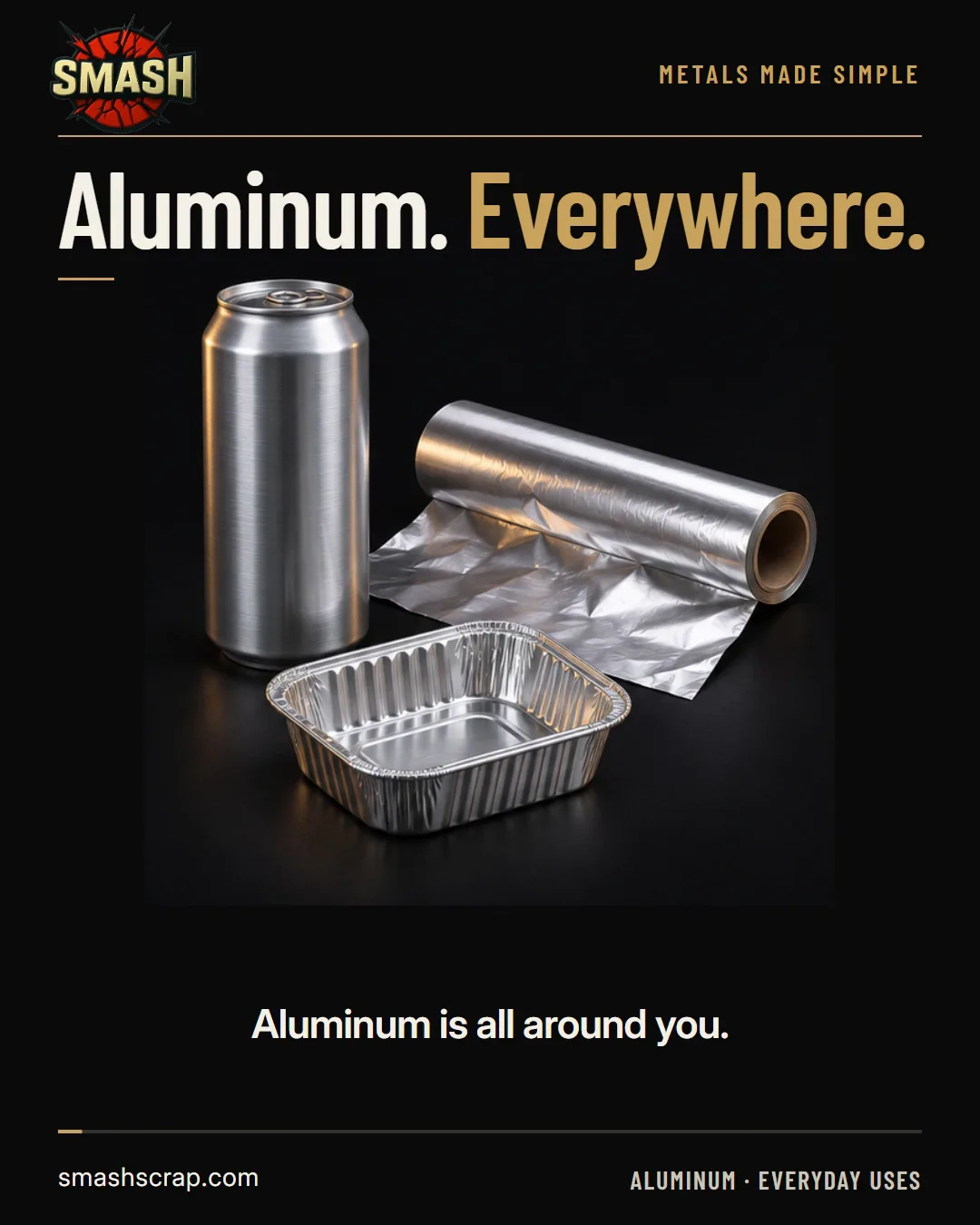
- Packaging: Beverage cans, foil and food trays are familiar examples. A thin rolled sheet can become a flexible wrapper or a shaped container. Check your local recycling program's instructions for food residue and foil.
- Buildings: Window frames, siding, gutters and shaped extrusions can contain aluminum. A frame may also include glass, plastic seals, thermal breaks and steel fasteners.
- Vehicles: Aluminum alloys are used in wheels, engine castings and some body panels. Similar-looking parts may use different materials, so the product's appearance alone does not establish its composition.
- Electronics: Laptop cases and heat sinks are useful examples. A heat sink helps move heat away from electronic components. A complete device also contains other materials and needs an appropriate electronics-recycling route.
One metal, different products and alloys
“Contains aluminum” is a starting point, not a finished material description. Rolled packaging, shaped extrusions and cast components are made for different jobs. Coatings and attached materials can also change how a recycler prepares a product.
For example, a bare length of extrusion is easier to describe than a complete window assembly. A loose alloy wheel is different from a wheel-and-tire assembly. Keep those distinctions visible when you photograph or organize a load.
Why keeping aluminum in circulation matters
The International Aluminium Institute reports that recycling aluminum uses about 95% less energy than producing primary aluminum. Its comparison uses global production-energy data for 2019. Recovering material from products is an important part of returning aluminum to use.
Before you prepare a load
- Keep recognizable material types separate. Group cans, extrusions, cast parts and mixed assemblies separately where practical. Do not combine everything just because it looks silver.
- Describe the whole item. Note attached steel, rubber, plastic, glass or other components. Clear photographs should show both the material and anything still attached.
- Ask the receiving recycler what they accept. Confirm preparation and sorting requirements before you strip, cut or dismantle a product. Household packaging, electronics and business scrap may follow different collection routes.
You do not need to guess a commercial grade from this video. Use it to recognize common applications, then confirm the material and preparation with the recycler handling it.
Explore SMASH's auction platforms
Have a business load to present to buyers? Visit SMASH's U.S. scrap auction platform. For Canadian material, use SMASH Recycling Canada. Choose the platform for your country and review the applicable sale terms.
What aluminum product do you handle every day? A can is only the beginning.
Sources and video notes
- The Aluminum Association: Processing 101
- Aluminum Extruders Council: Thermal Management
- International Aluminium Institute: Automotive
- International Aluminium Institute: Facts About Aluminium
The video and cover use AI-generated product illustrations and synthetic narration. They illustrate common applications, not SMASH inventory or a physical material test.