Best Price for Scrap Metal Chicago: Smart Seller's Guide
Why Most Chicago Scrap Sellers Leave Money on the Table
You've got a load ready to move. You call one buyer, take whatever they offer, and move on. That's how it's always been done in Chicago — and it's exactly why most yards and sellers never see what their material is actually worth. One call means one number. No competition. No leverage. No way to know if you got a fair shake.
This guide breaks down how to sell scrap metal in Chicago the right way — what material moves, what regulations you need to know in Illinois, how to prep your loads to command better offers, and how platforms like SMASH Scrap — North America's B2B scrap metal auction platform are changing the game for serious sellers.
What Scrap Metal Is in Demand in Chicago Right Now
Chicago sits at the center of North America's freight network. Steel mills, foundries, auto manufacturers, and heavy industrial plants run in every direction from the metro. That industrial density means buyer demand is real and consistent — if you're selling the right material.
Here's what moves well in the Chicago market:
- Ferrous scrap (steel, cast iron, structural steel) — High-volume demand. Chicago is a key sourcing hub for Midwest steel mills. Shredded steel, HMS 1&2, and plate and structural are all actively bought.
- Copper — Bare bright, #1 and #2 copper wire, copper tubing. Non-ferrous moves fast, but documentation requirements are strict (more on that below).
- Aluminum — Sheet, cast, extrusions, and clips. Auto dismantlers and industrial sources feed a lot of aluminum into the Chicago pipeline.
- Catalytic converters (cats) — High-value PGM content. Chicago yards deal in volume, but cats require detailed documentation, VIN tracking, and serial number records. No shortcuts.
- Stainless steel and brass — Steady secondary demand. Grade matters. Mixed or contaminated loads get discounted hard.
- E-scrap and electronic cores — Servers, telecom equipment, and industrial electronics. Buyers want clean, sorted loads with documented origin.
If you're generating material from demolition, manufacturing, or auto dismantling, you're sitting on real value. The question is how well you document, sort, and sell it.
Illinois Regulations Every Scrap Seller Needs to Know
Illinois takes scrap metal compliance seriously — and Chicago layers its own rules on top of state requirements. Ignoring the paperwork isn't just sloppy, it can cost you a sale or get a load rejected at the yard.
Here's what to keep in mind:
- Seller ID requirements — Illinois scrap dealers must record the seller's identification, vehicle information, and material details for non-ferrous transactions. Copper and catalytic converters get extra scrutiny.
- Payment restrictions on high-theft items — For certain materials — including copper, cats, and other high-theft non-ferrous — Illinois may require delayed payment or restrict cash transactions. Check current Illinois statutes before your first transaction.
- Transaction record retention — Dealers must keep records for a defined period and may be required to upload data to law enforcement systems. If you're selling regularly, understand your obligations on the buyer side too.
- City of Chicago licensing — Yards operating inside city limits need specific business licenses. Sellers dealing directly with city-licensed facilities should confirm the yard is compliant before transacting.
- Photo and video documentation — Chicago municipal ordinances often require dealers to maintain photographic records of transactions. If your buyer isn't documenting the sale, that's a red flag.
The cleanest way to stay compliant? Document everything before the load moves. Photo documentation, organized packing lists, serial tracking on cats and cores — this isn't just legal cover, it also makes your loads more attractive to vetted buyers. When you explore the SMASH scrap metal marketplace, that documentation infrastructure is built in from day one.
How to Get the Best Price When You Sell Scrap Metal in Chicago
Chicago has no shortage of buyers. That's actually your advantage — if you use it. Most sellers don't. They default to the same yard, the same contact, and the same handshake price. That's a single-point estimate on material worth a competitive market rate.
Here's how experienced sellers approach it differently:
- Sort before you sell. Mixed loads get penalized. Clean copper versus mixed copper is a completely different price per pound. Take the time to separate material by grade and metal type before you quote or list anything.
- Document your inventory properly. Weight estimates, photos, grade descriptions, and — for cats — VIN and serial tracking. Buyers bid with more confidence on a well-documented load. That confidence shows up in the offer.
- Get more than one offer. This sounds obvious. Most sellers still don't do it. One buyer sets the floor. Multiple buyers compete toward the ceiling. That's the basic math of price discovery.
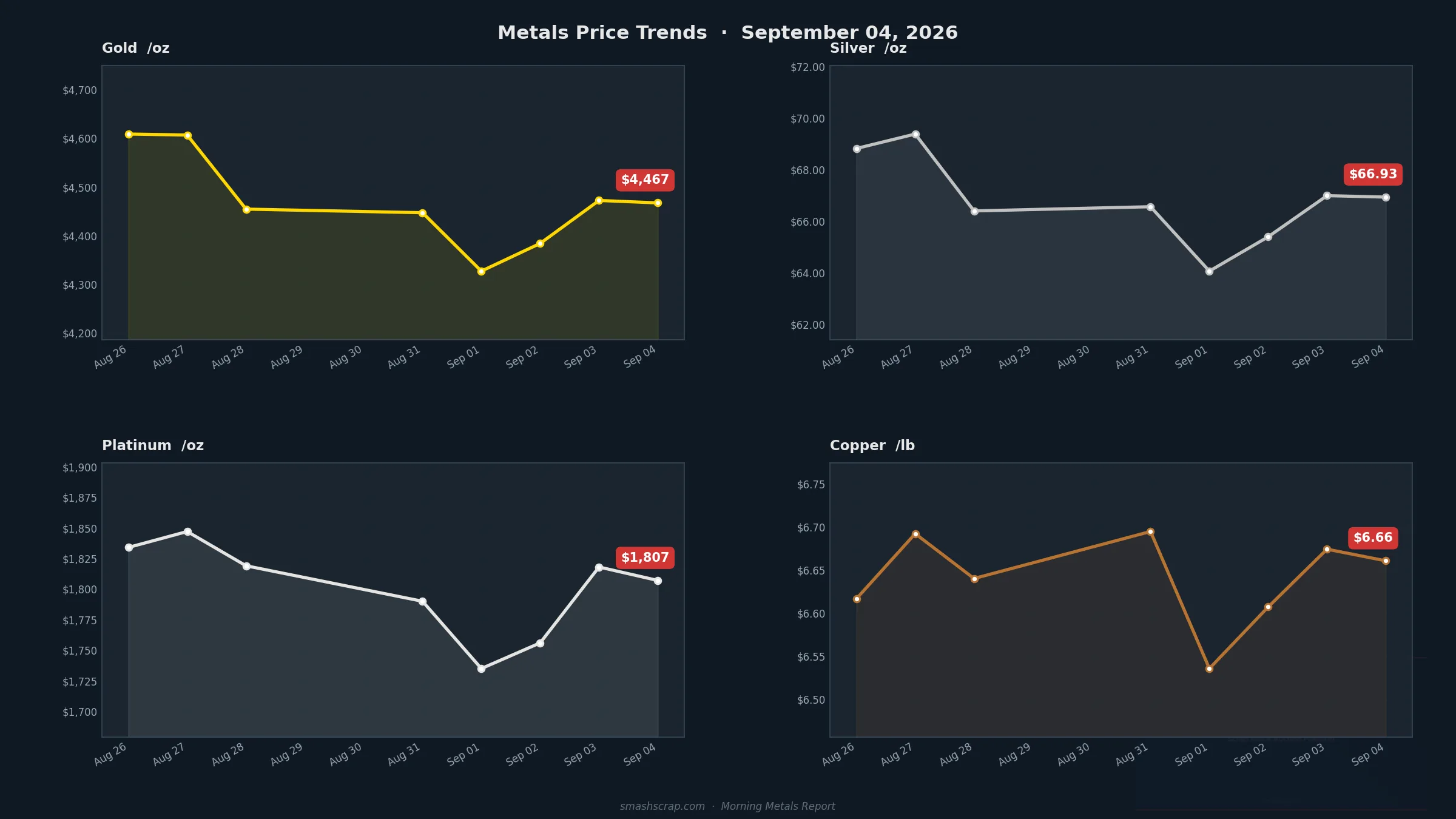
- Know your benchmarks. Non-ferrous pricing tracks COMEX and LME closely. Chicago yards apply a per-pound discount to those benchmarks. Knowing the benchmark means you know when a discount is reasonable and when you're getting clipped.
- Understand the load timing. Ferrous pricing is closely tied to Midwest mill demand and national indexes. If you're holding material and the market is moving, timing a sale matters. Watching the market — even directionally — gives you context.
Prices fluctuate daily. Always check current rates before committing to a sale. A price you were offered last week may be materially different from what you'd get today. Disclaimer: Metal prices change frequently. Verify current market rates before listing or selling any material.
Why a Scrap Metal Auction Online Changes the Math
Here's the old way: you call one yard, describe the load, take the number, and truck it over. Maybe you call two yards if you feel ambitious. You never really know if you left money on the table.
Here's the SMASH way: you list your load with photos, weights, grades, and documentation. Vetted buyers across the network see it. They compete. You see real offers side by side. No guessing. No one buyer controlling the narrative.
That's what a scrap metal auction online does for a market like Chicago, where you have real industrial volume and multiple buyers already in the region. Competition among buyers is what reveals the actual market price — not one phone call to one contact who knows you'll probably take whatever they offer.
SMASH charges no subscription fees. The platform only works when sellers win. Auto-invoicing, BOL support, and inventory tools mean less admin and more time running your operation. If you're dealing in cats, the VIN lookup and serial tracking features keep you compliant with Illinois documentation requirements without extra paperwork on your end.
For the latest on pricing trends and market conditions, read the latest scrap industry news to stay ahead of market shifts before they hit your next load.
Scrap Metal Inventory Management: The Detail Most Sellers Skip
You can't get a fair price on a load nobody understands. Buyers bid on information. Vague descriptions, missing weights, and no photos mean buyers pad their offers with a discount for uncertainty — or skip the load entirely.
Solid scrap metal inventory management looks like this:
- Accurate weight by material type, not the whole load lumped together
- Clear grade identification — #1 copper wire versus insulated wire versus irony copper are three different prices
- Photographic documentation of the load before it ships
- Serial numbers and VINs on catalytic converters and cores — non-negotiable in Illinois
- Packing lists that match the actual load so there are no disputes on arrival
This level of documentation used to require serious administrative overhead. SMASH builds it into the listing process. You document once, buyers see it clearly, and the record exists for compliance purposes. That's not extra work — it's replacing the disorganized version of extra work with a version that actually helps you sell.
Chicago scrap yards and industrial sellers operating at volume know that documentation is what separates a clean transaction from a dispute. Build the habit early. It compounds over time in both compliance and price outcomes.
If you're also dealing in end-of-life vehicles as part of your operation, getmyscrapcar.com is worth bookmarking as a resource in that segment of the market.
Finding Reputable Buyers in Chicago and Beyond
Chicago has large regional processors, neighborhood yards, specialized auto dismantlers, and electronics recyclers — the full range. Volume sellers have options. But "options" only matters if you're actually reaching multiple buyers and getting competitive offers.
Vetting a buyer means more than checking if they have a yard. It means confirming they're licensed, understanding their payment terms, knowing their capacity for your material type, and making sure their documentation process meets Illinois requirements. A buyer who can't tell you about their compliance process isn't a buyer you want handling your material.
SMASH pre-vets buyers on the platform. You're not cold-calling yards and hoping. You're listing to a network of qualified buyers who have already passed screening. That's a different starting point — and it matters when you're moving real volume.
Frequently Asked Questions
Q: How do I get the best price for scrap metal in Chicago?
Sort your material by grade and metal type before selling. Document your load with photos and accurate weights. Get offers from multiple buyers — competition is what drives price discovery. Using a platform like SMASH puts your load in front of vetted buyers who compete, rather than relying on a single yard's offer.
Q: What regulations do I need to know to sell scrap metal in Illinois?
Illinois requires scrap dealers to record seller identification and material details for non-ferrous transactions. High-theft materials like copper and catalytic converters face additional documentation and payment restrictions. Chicago adds city-level licensing and photo documentation requirements on top of state rules. Always verify current Illinois statutes and Chicago municipal code before your first transaction.
Q: How much is scrap metal worth per pound in Chicago right now?
Scrap metal prices fluctuate daily based on commodity markets like COMEX and LME for non-ferrous, and domestic mill demand indexes for ferrous. Chicago yards apply per-pound discounts to benchmark prices. Always check current rates directly with buyers or through a live marketplace before committing to a sale. We do not publish static price quotes — metal values change too frequently for that to be useful.
Q: What is a scrap metal auction online and how does it work?
An online scrap metal auction lets sellers list documented loads — with photos, weights, grades, and specs — visible to multiple vetted buyers who submit competitive bids. SMASH operates this way: you list once, buyers compete, and you see real offers side by side rather than relying on a single phone quote. No subscription fee. The platform earns when you sell.
Q: Do I need to track VINs and serial numbers on catalytic converters in Illinois?
Yes. Illinois takes catalytic converter compliance seriously, and Chicago adds local enforcement expectations on top. VIN documentation and serial tracking are required for legitimate transactions. SMASH's built-in VIN lookup and serial tracking tools make this straightforward to manage within the listing process, keeping your records clean for compliance purposes.
---Ready to stop guessing what your loads are worth? List your scrap on SMASH today — register for free at smashscrap.com. Selling or buying? Reach Jeff directly at jeff@smashscrap.com.
Follow SMASH on LinkedIn for scrap metal market updates, industry news, and platform announcements — straight from the yard floor, not a marketing department.