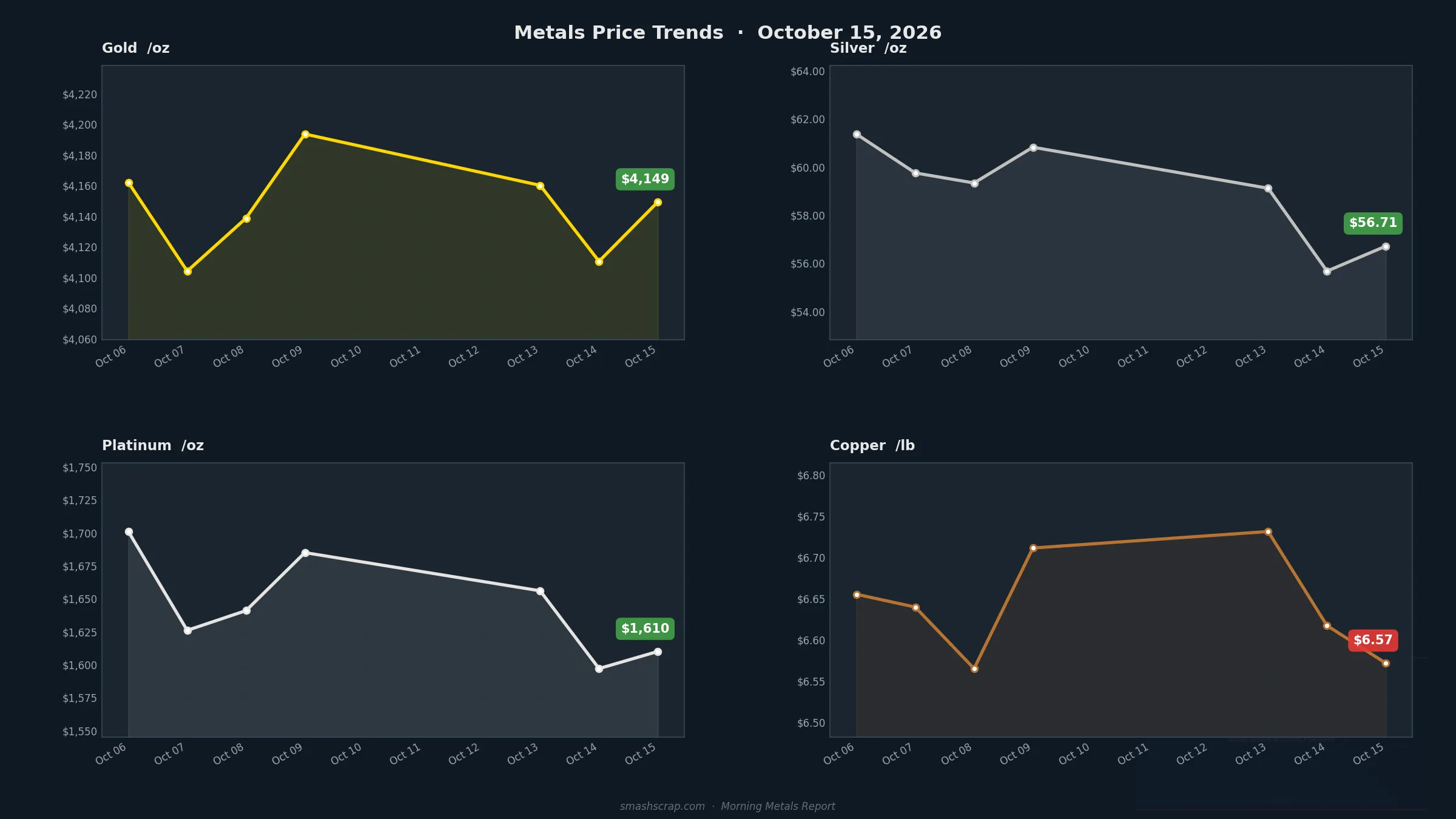
Copper Correction Signals Market Shift | Long Beach
The week ending May 17, 2026 delivered a reality check for scrap metal markets. After months of geopolitical-driven rallies, key industrial metals faced their first significant pullback as investors weighed inflation concerns against supply disruption fears. These scrap metal industry trends signal a pivotal moment for recyclers and B2B traders navigating volatile pricing conditions.
From copper's sharp correction to ongoing Middle East supply risks in aluminum, this week highlighted how quickly market sentiment can shift in today's interconnected commodity landscape. For scrap dealers and buyers using platforms like SMASH Scrap — North America's B2B scrap metal auction platform, understanding these macro moves becomes crucial for timing purchases and sales.
Copper Takes a Hit: End of the Iran Rally?
MCX copper futures delivered their sharpest single-day decline in weeks on May 16, dropping 3.27% to ₹1,340.10 per kilogram. The selloff came after a remarkable 9% rally since Iran conflict escalation began, taking prices near January 2026 peaks before profit-taking kicked in.
Open interest fell 7.18% alongside the price drop, suggesting long liquidation rather than new short selling. This pattern typically signals temporary correction rather than trend reversal. Volume spiked 4.2% as traders actively managed positions through the volatility.
For copper scrap markets, this translates to continued firm pricing despite day-to-day choppiness. Secondary smelters remain hungry for feedstock to meet AI infrastructure and electric vehicle demand. However, buyers may pause on building large inventory positions after witnessing how quickly futures can reverse from elevated levels.
The structural bull case for copper remains intact. Supply tightness from Chilean mine disruptions, combined with surging data center construction and EV adoption, keeps fundamentals supportive. Scrap dealers should view any meaningful pullback as opportunity rather than trend change.
Aluminum Supply Disruption Story Continues
While copper grabbed headlines with its sharp reversal, aluminum markets maintained their supply-driven rally. QatarEnergy's decision to halt aluminum output at the Qatalum smelter continues reverberating through global markets, creating structural tightness in primary metal availability.
This Middle East supply risk particularly benefits North American aluminum scrap operations. With primary production curtailed in key Gulf regions, secondary producers gain market share and pricing power. Extrusion scrap, sheet grades, and high-quality alloys command premium pricing as remelt feedstock becomes increasingly valuable.
California recyclers, including those in Long Beach, benefit doubly from this trend. The state's massive aerospace and automotive sectors generate high-grade aluminum scrap precisely when global supply chains need alternative feedstock sources. Explore the SMASH scrap metal marketplace to capitalize on these premium opportunities.
Energy-intensive primary smelting faces additional headwinds from rising power costs and carbon regulations. This structural shift toward secondary production creates long-term tailwinds for the aluminum scrap industry well beyond current geopolitical disruptions.
B2B Marketplace Activity Surges
Market volatility drives increased activity on digital scrap platforms as buyers and sellers seek price discovery and risk management tools. Traditional spot markets struggle to provide real-time transparency when prices move 3% in single sessions.
B2B scrap metal marketplaces like SMASH report heightened auction participation as market participants prefer competitive bidding over bilateral negotiations during uncertain periods. This trend particularly benefits smaller recyclers who gain access to broader buyer networks and transparent pricing mechanisms.
The shift toward online trading accelerated throughout California's major industrial centers. Long Beach port operations, aerospace manufacturing in Southern California, and electronics recycling facilities increasingly rely on digital platforms for efficient scrap disposal and procurement.
For sellers, auction formats provide protection against sudden price drops by ensuring competitive bidding even during volatile periods. Buyers benefit from expanded inventory access and standardized quality specifications that reduce transaction friction.
Precious Metals Under Pressure
Gold and silver faced significant selling pressure this week as Iran conflict fears shifted from safe-haven demand to inflation concerns. Rising oil prices from Middle East tensions sparked renewed Federal Reserve hawkishness, crushing precious metals momentum.
Silver dropped below $76 per ounce while gold tested $4,500 support levels. Rising real yields and dollar strength created challenging conditions for non-yielding assets. This dynamic impacts industrial scrap containing precious metal content, particularly electronic waste and catalytic converters.
However, the physical scrap market often disconnects from futures during extreme moves. Industrial demand for platinum group metals remains strong from automotive and chemical sectors. Read the latest scrap industry news for detailed coverage of precious metal recycling trends.
Catalytic converter recyclers should monitor automotive production schedules closely. While precious metal prices face headwinds, vehicle production increases drive steady demand for PGM recovery from end-of-life vehicles.
Regulatory Watch: Environmental Policies Gain Momentum
Environmental regulations continue tightening across major jurisdictions, creating new compliance requirements for scrap processors. California leads with expanded producer responsibility mandates that shift recycling costs to manufacturers rather than consumers.
These regulatory trends favor established recyclers with proper environmental controls and documentation systems. Smaller operators face increasing compliance costs that may force industry consolidation. Digital platforms help smaller players access shared compliance resources and maintain competitiveness.
Export regulations remain in flux as countries balance domestic recycling capacity with international trade relationships. Recent updates to waste shipment rules require enhanced documentation for cross-border scrap movements. Explore scrap car removal services at GetMyScrapCar for compliant vehicle recycling solutions.
The regulatory environment increasingly favors transparency and traceability, playing to the strengths of digital marketplaces that maintain detailed transaction records and chain-of-custody documentation.
Week Ahead: Key Events to Watch
Next week brings several catalysts that could drive continued market volatility. Federal Reserve officials speak Tuesday and Thursday, potentially clarifying monetary policy stance amid renewed inflation concerns. Any hawkish commentary could pressure commodity prices further.
Chinese economic data releases Wednesday include industrial production and steel output figures. These metrics provide crucial insight into the world's largest metals consumer and typically move copper and steel scrap prices significantly.
Earnings reports from major automotive manufacturers may offer guidance on production schedules and metal consumption patterns. Electric vehicle adoption rates remain a key driver for copper, lithium, and rare earth element demand.
Geopolitical developments in the Middle East require constant monitoring. Any escalation could reignite supply disruption fears and reverse this week's commodity selloff. Conversely, diplomatic progress might pressure prices further as risk premiums unwind.
Frequently Asked Questions
Q: How do geopolitical events affect scrap metal industry trends?
Geopolitical tensions impact scrap markets through supply disruption fears, safe-haven demand for precious metals, and energy cost volatility. Recent Iran conflict drove copper prices up 9% before profit-taking emerged. Scrap dealers should monitor primary production disruptions that increase secondary market demand.
Q: What makes Long Beach an important hub for California scrap metal trading?
Long Beach's strategic port location enables efficient export of scrap metals to Asian markets while serving Southern California's aerospace, automotive, and manufacturing sectors. The city's proximity to major industrial facilities generates consistent high-grade scrap supply for B2B marketplaces like SMASH.
Q: How do B2B scrap metal marketplaces help during volatile pricing periods?
Digital platforms provide real-time price discovery, competitive bidding, and transparent transactions when traditional spot markets become illiquid. Auction formats protect sellers from sudden price drops while giving buyers access to broader inventory during supply tightness. SMASH's marketplace helps both sides manage volatility risk.
Q: Why are aluminum scrap prices remaining firm despite copper's correction?
Aluminum faces structural supply disruption from Middle East production curtailments, while copper's selloff reflects profit-taking after geopolitical rallies. Primary aluminum smelting requires enormous energy inputs, making secondary production increasingly attractive. This fundamental shift supports aluminum scrap pricing independent of short-term copper moves.
Q: Should scrap dealers build inventory during current market volatility?
Inventory decisions depend on storage costs, cash flow, and risk tolerance. Current volatility suggests smaller, more frequent transactions rather than large position-building. Digital marketplaces enable efficient inventory turnover without storage commitments, making them ideal for volatile periods.
Prices mentioned are examples for illustration and fluctuate based on market conditions, location, grade, and timing. Always check current rates before making trading decisions.
List your scrap on SMASH today — register for free at smashscrap.com.
Follow SMASH on LinkedIn for industry updates and scrap metal market insights delivered directly to your feed.