Dearborn Fabricator Boosts Profits via Smart Scrap Tracking
From Chaos to Cash: How a Dearborn Fabricator Transformed Their Scrap Metal Inventory Management
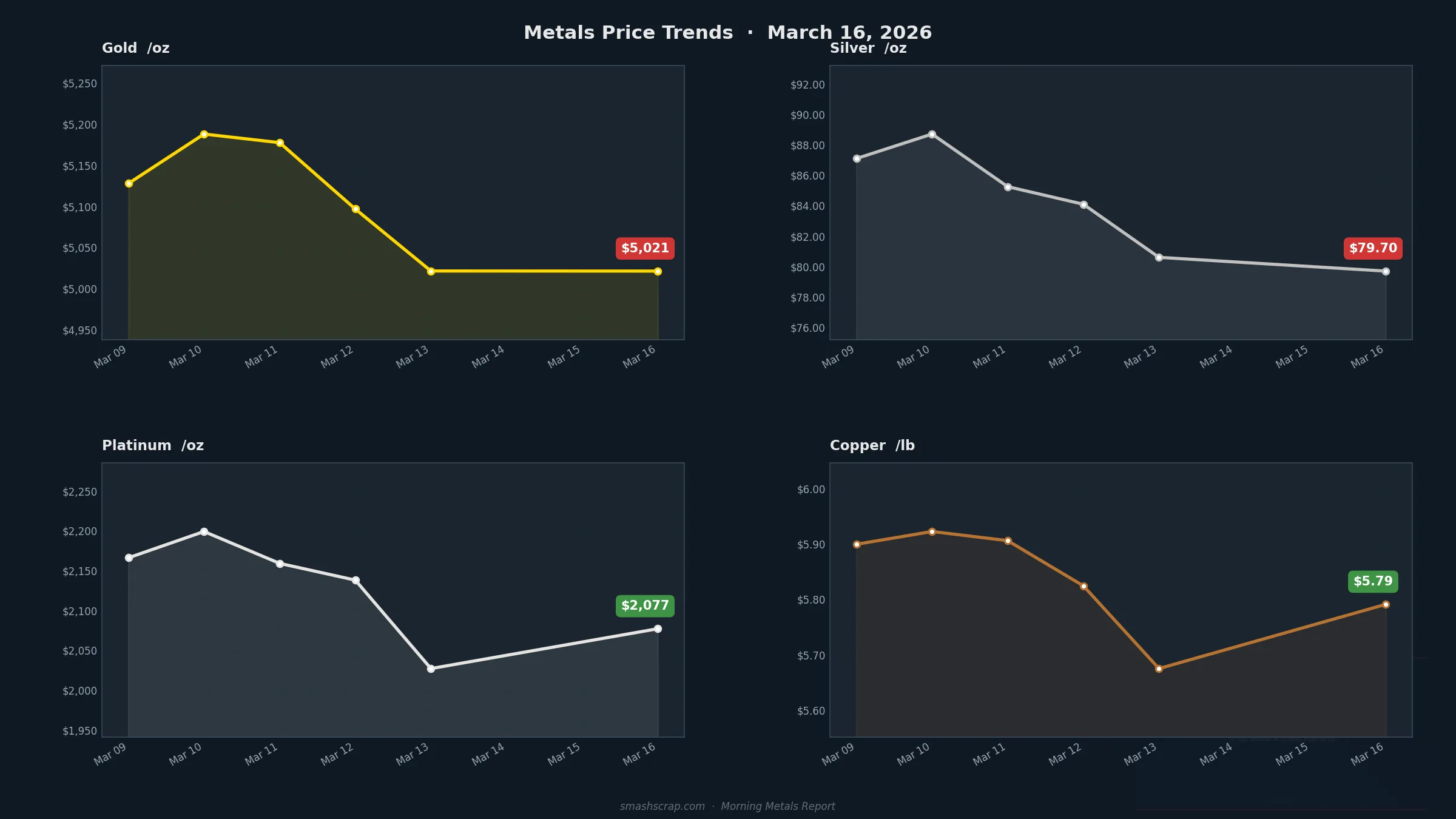
Marcus Rivera never imagined that a cluttered back lot behind his metal fabrication shop would become his biggest headache in 2026. The 15-year owner of Rivera Custom Works in Dearborn, Michigan, had always treated scrap metal as an afterthought — until rising platinum prices and volatile market conditions forced him to rethink his entire approach to scrap metal inventory management.
"I was literally throwing money away," Rivera recalls, standing in what's now an organized staging area for recyclable materials. "We had copper pipes mixed with aluminum sheets, catalytic converters buried under steel offcuts. I couldn't tell you what we had or what it was worth on any given day."
Rivera's story mirrors that of countless small manufacturers and recyclers across Michigan who struggle to maximize returns from their scrap materials. With commodity prices fluctuating daily and specialized materials like platinum commanding premium rates, proper inventory management isn't just good business — it's essential for profitability.
The Breaking Point: When Disorganization Costs Real Money
The wake-up call came in January 2026 when Rivera discovered a pallet of mixed catalytic converters that had been sitting exposed to winter weather for months. Some contained platinum group metals worth hundreds of dollars each, but moisture damage had compromised several units.
"My guys were grabbing whatever scrap was closest to throw in the truck for our monthly recycler run," Rivera explains. "We were getting bulk pricing for everything because nobody could sort it properly. Meanwhile, I'm reading that platinum prices are hitting multi-year highs, and I'm selling platinum-bearing cats at steel prices."
The inefficiency extended beyond pricing. Rivera's team spent hours each month loading mixed materials, only to watch the recycler spend additional time sorting on-site — time that reduced their final payout. Employee productivity suffered as workers navigated the disorganized back lot, and customer complaints increased when metal debris migrated to finished work areas.
Rivera knew he needed a systematic approach to scrap metal inventory management, but traditional recycling partnerships weren't providing the transparency or competitive pricing his growing operation required.
Discovering SMASH: A Digital Solution for Modern Recyclers
The turning point came during a Michigan Manufacturing Association meetup in nearby Detroit, where Rivera connected with SMASH Scrap — Canada's B2B scrap metal auction platform. Unlike traditional recycling relationships, SMASH offered something Rivera had never considered: competitive bidding for his materials.
"The concept was brilliant," Rivera says. "Instead of calling one guy and accepting whatever he offered, I could list my materials and let multiple buyers compete. But first, I had to get organized."
SMASH's platform required detailed material descriptions, photos, and quantities — forcing Rivera to implement the inventory tracking system he'd avoided for years. The platform's categories helped him understand the true value of different scrap streams, from basic steel and aluminum to specialty alloys and precious metal-bearing components.
Rivera started small, dedicating two hours each Saturday morning to sorting and cataloging the previous week's scrap generation. He invested in basic sorting bins, a digital scale, and a simple spreadsheet system to track material accumulation over time.
Implementation: Building Systems That Work
Rivera's transformation didn't happen overnight. He began by establishing clear procedures for his four-person team, assigning specific responsibilities for material handling and storage.
"We designated sorting areas for different material types," Rivera explains. "Copper in one bin, aluminum in another, stainless steel separate from regular steel. Catalytic converters got their own locked cabinet with individual tagging."
The new system integrated seamlessly with their existing workflow. Instead of tossing offcuts into a general pile, workers learned to identify material grades and sort accordingly. Rivera provided basic training on recognizing valuable alloys and proper storage techniques to prevent contamination.
Using SMASH's browse live scrap metal auctions feature, Rivera studied successful listings to understand how other sellers presented their materials. He learned the importance of clear photography, accurate weight measurements, and detailed descriptions that highlighted material purity and condition.
Within three months, Rivera had transformed his chaotic back lot into an organized staging area where every pound of scrap was accounted for and properly categorized.
Results: The Numbers Don't Lie
The financial impact of Rivera's improved scrap metal inventory management system exceeded his expectations. By March 2026, his monthly scrap revenue had increased by 40% compared to the previous year, despite generating roughly the same volume of waste materials.
"The biggest surprise was the catalytic converters," Rivera notes. "I used to get maybe $50 each selling them bulk. Now I'm seeing individual units fetch $200-300 on SMASH auctions, especially the ones from hybrid vehicles that contain more platinum."
Beyond direct revenue improvements, the organized system generated unexpected operational benefits. Material handling time decreased by 30%, employee injuries from navigating cluttered areas dropped to zero, and customer satisfaction improved as the cleaner work environment reflected better on Rivera's overall operation.
The transparency of the scrap metal auction platform also provided valuable market intelligence. Rivera began timing his listings to capitalize on commodity price spikes, holding certain materials when markets were soft and releasing inventory when demand peaked.
"I actually read the latest scrap industry news now," Rivera laughs. "When I see reports about platinum supply constraints or automotive industry changes, I know how that affects my inventory value."
Lessons Learned and Best Practices
Rivera's success story offers practical insights for other businesses struggling with scrap metal recycling Michigan operations. His key recommendations focus on systems and consistency rather than complex technology.
"Start with basic sorting," Rivera advises. "You don't need expensive equipment, just designated areas and clear procedures. The time you invest in organization pays for itself quickly through better pricing."
Timing proved crucial for maximizing returns. Rivera learned to monitor market conditions and seasonal patterns, discovering that certain materials command premium prices during specific periods. Construction-related scrap often peaks in spring, while automotive catalytic converters see steady demand year-round.
Photography skills became unexpectedly valuable. Clear, well-lit images showcasing material condition and purity attracted more bidders and higher final prices. Rivera invested in a basic digital camera and learned simple techniques for highlighting material quality.
Documentation emerged as a competitive advantage. Detailed records of material sources, processing dates, and storage conditions allowed Rivera to provide buyers with confidence-building information that justified premium bids.
The Dearborn fabricator also discovered the value of building relationships within the SMASH community. Repeat buyers began seeking out his listings based on his reputation for accurate descriptions and quality materials.
The Ripple Effect: Beyond Revenue
Rivera's inventory management improvements created benefits extending well beyond his bottom line. The organized system attracted attention from potential new customers who viewed the clean, professional operation as indicative of overall quality standards.
"We've landed three new fabrication contracts this year partly because clients were impressed with our facility organization," Rivera reports. "Professional appearance matters in this business."
Environmental benefits also emerged from the improved system. Better sorting reduced contamination, increasing the percentage of materials that could be effectively recycled. Rivera's operation now diverts over 95% of waste materials from landfills, compared to roughly 70% under the previous chaotic system.
The success prompted Rivera to expand his SMASH scrap activities beyond his own waste streams. He began accepting materials from other local fabricators, creating a small but profitable side business while helping fellow Dearborn manufacturers access competitive pricing.
Looking Forward: Scaling Success
Rivera's transformation continues evolving as he explores new opportunities within the organized scrap ecosystem. He's considering adding basic processing equipment to increase material value before listing, and investigating partnerships with other Michigan manufacturers to achieve economy of scale benefits.
"The platform opened my eyes to how much money was sitting in that back lot," Rivera reflects. "Now I see scrap as a legitimate revenue stream, not just waste disposal. That mindset shift changed everything."
His advice for other businesses considering similar changes emphasizes starting small and building momentum through early wins. The key lies not in perfect systems, but in consistent implementation of basic organizational principles.
For manufacturers and recyclers across Michigan, Rivera's story demonstrates that effective scrap metal inventory management doesn't require massive capital investment or complex technology. Success comes from understanding material values, implementing organized procedures, and leveraging competitive platforms like free scrap car pickup services and auction systems to maximize returns.
Frequently Asked Questions
Q: How much time does proper scrap metal inventory management require weekly?
Based on Rivera's experience, most small operations need 2-4 hours per week for sorting, cataloging, and listing activities. The time investment decreases as procedures become routine, and the revenue improvements typically justify the effort within the first month.
Q: What's the minimum amount of scrap needed to make SMASH auctions worthwhile?
SMASH accommodates listings from small quantities to industrial volumes. Rivera started with individual catalytic converter auctions and gradually expanded to bulk material lots. Even small quantities can generate competitive bidding when properly presented and timed.
Q: How do Dearborn recyclers stay current with platinum and other commodity price fluctuations?
Successful recyclers monitor daily commodity reports, industry publications, and market analysis resources. Many SMASH users track pricing trends to time their listings strategically, holding materials during market downturns and releasing inventory when prices peak.
Q: What storage requirements are necessary for organized scrap metal inventory management?
Basic requirements include weather protection, contamination prevention, and security for valuable materials like catalytic converters. Rivera's system uses simple bins, tarps, and a locked cabinet, proving that organization matters more than expensive infrastructure.
Q: Can small fabrication shops in Michigan compete with large recyclers on auction platforms?
Absolutely. Small operations often have advantages including material traceability, flexible timing, and specialized knowledge of their waste streams. Rivera's success demonstrates that quality presentation and reliable service can command premium prices regardless of volume.
Ready to transform your scrap metal management system like Rivera did? List your scrap on SMASH today — register for free at smashscrap.com.