Gold Rebound Boosts B2B Scrap Metal Marketplace SF
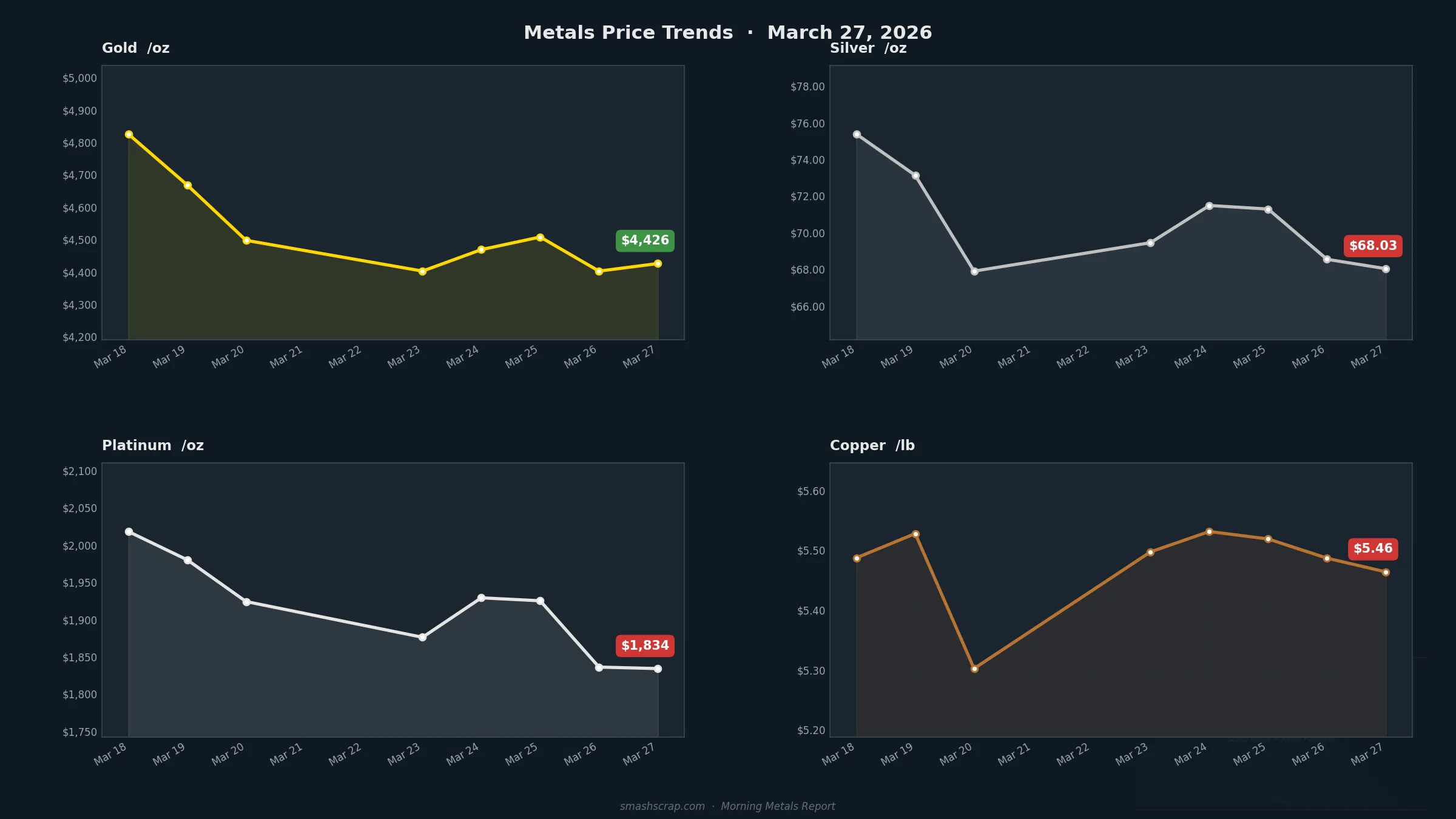
Weekly Scrap Market Recap: March 29, 2026
The B2B scrap metal marketplace ended the week on a cautiously optimistic note as gold snapped its three-week losing streak and industrial metals showed mixed signals. For scrap dealers looking to sell scrap metal San Francisco and across California, this week brought both opportunities and reminders about regulatory compliance that could impact operations moving forward.
Market volatility continues to shape pricing decisions on every scrap metal auction platform, with buyers and sellers adjusting strategies based on global commodity trends. The week's developments highlight why real-time market access through platforms like SMASH Scrap — North America's B2B scrap metal auction platform becomes crucial for maximizing returns in uncertain conditions.
Gold Recovery Signals Broader Metal Market Stabilization
Gold's rebound this week marked a significant shift after three consecutive weeks of losses, even as rising oil prices triggered renewed stagflation concerns. The precious metal's recovery suggests institutional confidence may be returning to commodity markets, which often correlates with increased demand for industrial scrap metals.
Industry analysts note that gold's institutional buy-in remains incomplete, with silver expected to follow gold's upward trajectory. This trend typically benefits scrap metal recycling California operations that handle precious metal-containing electronics and catalytic converters. When precious metals strengthen, it often signals broader economic stability that supports industrial metal demand.
For San Francisco scrap dealers, gold's recovery could indicate stronger pricing ahead for electronic scrap and automotive catalysts. The correlation between precious metals and industrial scrap values means this week's gold performance deserves attention from anyone operating in the Bay Area's competitive scrap market.
Regulatory Reminders Impact Local Operations
Hawaii's Kauai County issued new reminders about recycling rules following the relocation of scrap metal bins at Kekaha Landfill. While geographically distant from California, these regulatory updates reflect a nationwide trend toward stricter compliance requirements that affect scrap metal operations across all states.
San Francisco and California scrap dealers should expect similar regulatory scrutiny as municipalities increase oversight of recycling operations. The emphasis on proper categorization and handling procedures means documentation and compliance tracking become more critical for maintaining profitable operations.
Platforms that help manage compliance documentation alongside auction activities provide clear advantages in this regulatory environment. When you explore the SMASH scrap metal marketplace, you'll find tools designed to support both profitability and compliance requirements that modern scrap operations demand.
Institutional Investment Trends Shape Market Direction
Citigroup's decision to establish a London gold vault for precious metals operations signals growing institutional commitment to physical metals markets. This type of infrastructure investment typically precedes increased trading volumes and price stability across metal categories.
The banking sector's renewed focus on metals suggests improved financing options for scrap metal operations may emerge. Better access to working capital could help California recyclers expand operations and compete more effectively for premium materials.
TMC's push for a US seafloor mining hub, despite widening losses, demonstrates continued investment in domestic metal production capabilities. While deep-sea mining remains years from commercial viability, these initiatives could eventually impact scrap metal demand as domestic production increases.
What This Means for San Francisco Dealers
The institutional trends point toward a maturing metals market with better price discovery and financing options. San Francisco's position as a major West Coast financial center means local scrap dealers often benefit early from these institutional developments.
Staying informed about these broader trends helps predict pricing movements and adjust inventory strategies accordingly. Regular updates through sources like read the latest scrap industry news ensure you're positioned to capitalize on emerging opportunities.
Looking Ahead: Key Developments to Watch
Next week brings several factors that could influence scrap metal pricing across California. Oil price movements will continue impacting transportation costs, while ongoing stagflation concerns may affect industrial production levels that drive scrap demand.
The precious metals sector's recovery momentum needs confirmation through sustained buying interest. If institutional investment continues growing, expect positive spillover effects across industrial metals categories that drive scrap pricing.
Regulatory developments deserve close monitoring as spring brings typical increases in municipal recycling program updates. San Francisco area dealers should prepare for potential changes to local handling requirements or documentation standards.
Strategic Positioning for Market Changes
Successful scrap operations adapt quickly to changing market conditions. Having multiple buyer relationships through auction platforms provides flexibility when pricing conditions shift rapidly.
Inventory management becomes crucial during volatile periods. Holding the right mix of materials while maintaining cash flow requires accurate market timing and reliable price discovery mechanisms.
For those handling automotive materials, catalytic converter markets remain particularly sensitive to precious metal price movements. The connection between this week's gold recovery and future catalyst pricing deserves attention from specialized dealers.
Even Canadian operations benefit from US market developments, and services like get free scrap car pickup across Canada help capture value from automotive materials regardless of location.
Frequently Asked Questions
Q: How do gold price movements affect scrap metal values in San Francisco?
Gold price recovery often signals broader commodity market stability, which typically supports industrial metal values. San Francisco dealers handling electronic scrap or catalytic converters see more direct correlation, as these materials contain precious metals that track gold pricing trends.
Q: What regulatory changes should California scrap dealers expect in 2026?
Increased emphasis on documentation and proper material categorization continues statewide. While specific requirements vary by municipality, expect stricter oversight of recycling operations and enhanced reporting requirements for high-value materials like catalytic converters.
Q: How can B2B scrap metal marketplace platforms help during volatile market conditions?
Auction platforms provide real-time price discovery and access to multiple buyers, which becomes crucial during volatile periods. Instead of relying on single buyer relationships, dealers can quickly adjust to market conditions and maximize returns through competitive bidding processes.
Q: Why are institutional investment trends important for scrap metal recycling operations?
Institutional involvement typically brings improved financing options, better price stability, and increased trading volumes. These developments often translate into more predictable pricing and better working capital access for scrap operations of all sizes.
Q: What materials should San Francisco scrap dealers focus on given current market trends?
Electronic scrap and automotive catalysts show strong potential given precious metal recovery trends. Industrial copper and aluminum remain solid choices, while staying diversified across material categories helps navigate market volatility effectively.
List your scrap on SMASH today — register for free at smashscrap.com.