Scrap Metal Market Update: Rate Fears Hammer Precious Metals & Aluminum — Oct 2026
Scrap Metal Market Update: Inflation Data Pressures Metals Across the Board
If you've been watching commodity prices this week, you've likely noticed some significant red on the board. A hotter-than-expected U.S. inflation report is rattling metals markets heading into mid-October 2026, pushing several key scrap commodities to the bottom of their recent ranges. Here's a clear-eyed breakdown of what's moving, what's holding steady, and what it means for your yard.
The Big Picture: Inflation Is the Story
U.S. producer prices climbed 6.3% year over year in September — a number that caught markets off guard and immediately stoked expectations for additional interest rate hikes from the Federal Reserve. That's a meaningful headwind for metals. Higher rates strengthen the U.S. dollar, and since most metals are priced in dollars globally, a stronger dollar makes them more expensive for overseas buyers and tends to push prices lower. Add in the fact that rate hikes reduce appetite for industrial investment, and you have a recipe for broad commodity weakness.
The result? Precious metals and several base metals are under real pressure, while a small handful are holding their own.
Precious Metals: Taking the Hardest Hit
The precious metals complex is where the damage is most visible right now.
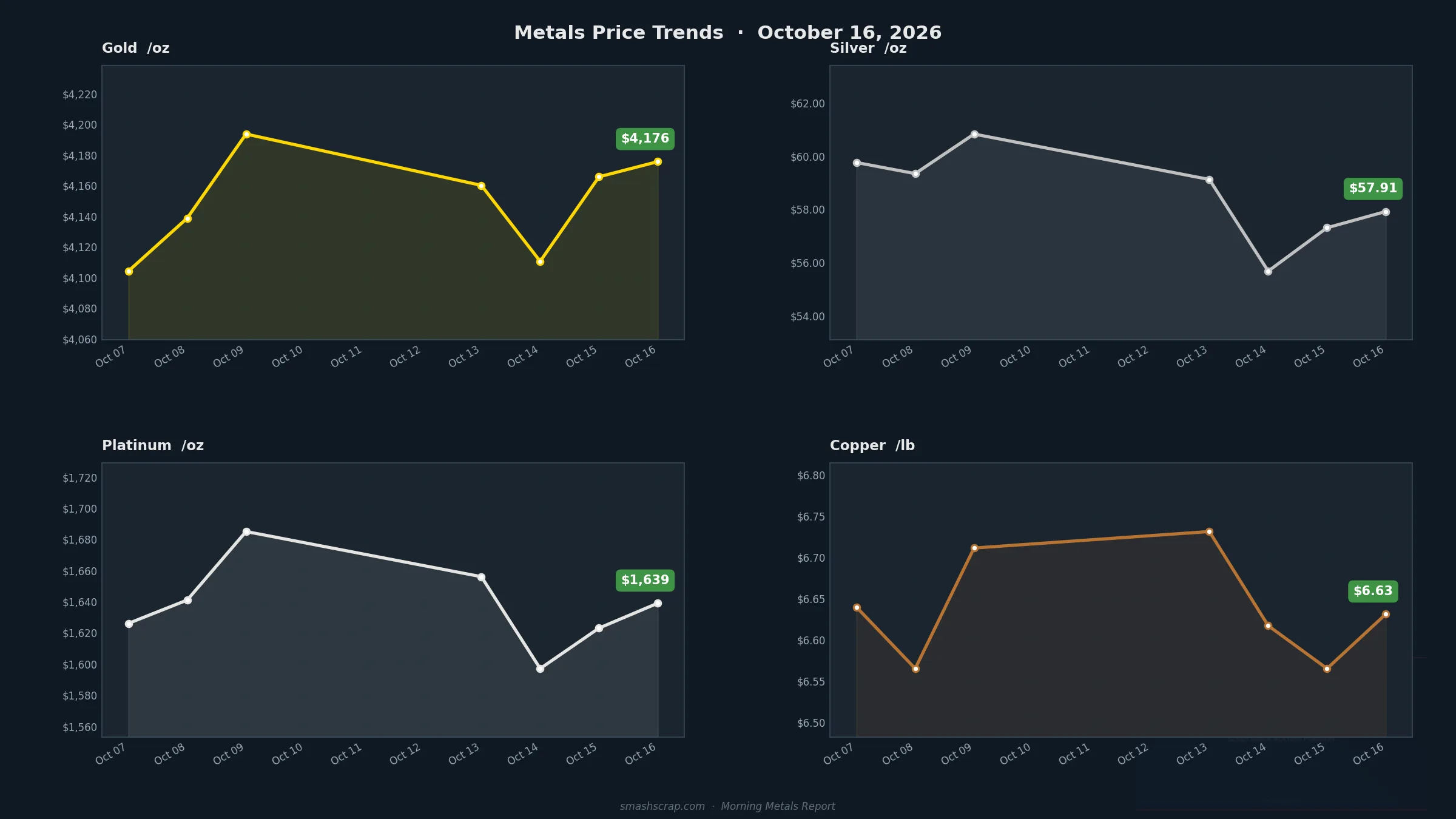
- Silver ($57.96/oz, ↓ 7.9% over 30 days): Silver is the worst performer among the major precious metals over the past month, and the pace of selling has accelerated recently. Weak near-term momentum suggests sellers remain in control.
- Palladium ($1,104/oz, ↓ 12.5%): Palladium is the weakest major metal in this entire market snapshot. It's also carrying the highest volatility, meaning prices could swing sharply in either direction. If you're holding palladium-bearing scrap, the risk environment here is elevated.
- Platinum ($1,633/oz, ↓ 7.2%): Platinum is well off its 30-day high and continues to drift lower alongside its PGM peers.
- Gold ($4,168.60/oz, ↓ 2.4%): Gold is declining, but the move has been orderly and relatively contained. Safe-haven demand — the same factor that sent gold soaring in recent years — is still providing a floor and limiting the downside.
- Rhodium ($9,150/oz, broadly stable): Rhodium is the outlier in the precious metals group, posting a small five-day gain and showing better support than its PGM cousins. It's a thin, illiquid market, but the relative stability stands out.
Base Metals: A Mixed Picture
The base metals story is more nuanced, with copper standing out as a relative bright spot even as others slide.
- Copper ($6.63/lb, ↑ 2.8% over 30 days): Copper is still the strongest performer in the base metals space over the past month, though it has pulled back over the last five sessions. The retreat is largely tied to a resolution at Chile's Escondida mine — one of the world's largest copper operations — where a potential strike was averted after a new labor agreement was approved. That removed a significant supply-risk premium from the market. Copper remains firm in the broader context, but watch for further softening if the dollar continues to strengthen.
- Aluminum ($1.36/lb, ↓ 8.3%): Aluminum is sitting near the bottom of its 30-day range and is one of the weaker performers among base metals. Demand concerns tied to the rate environment are weighing heavily here.
- Nickel ($6.75/lb, ↓ 7.7%): Nickel has hit its 30-day low and shows no clear sign of a bounce yet. Stainless and EV-related demand has not been enough to offset macro headwinds.
- Zinc ($1.69/lb, ↓ 5.0%): Like aluminum and nickel, zinc is sitting at the bottom of its recent range with bearish short-term momentum.
- Lead ($0.84/lb, ↑ 1.3%): Lead is quietly one of the better performers in the base metals group this month. Battery-related demand continues to provide modest support.
- Steel and Shredded Scrap ($366/mt and $413/mt, respectively): Both ferrous benchmarks are flat with no directional signal. The scrap steel market appears to be in a holding pattern while it waits for clearer demand signals from mills.
Key Takeaways
- U.S. inflation at 6.3% PPI year over year is the dominant market driver, boosting rate-hike expectations and the dollar.
- Palladium and silver are the hardest-hit metals, down 12.5% and 7.9% respectively over 30 days.
- Copper remains the relative base metal leader despite a recent pullback tied to easing Escondida strike risk.
- Aluminum, nickel, and zinc are all sitting at or near 30-day lows — sellers in these materials face a challenging pricing environment.
- Rhodium and lead are the most resilient performers in their respective categories right now.
- Ferrous scrap is flat and range-bound, offering stability but little upside at the moment.
What This Means for Scrap Sellers
For scrap yard operators, this is a market that rewards timing and transparency. If you're sitting on significant volumes of silver, palladium, aluminum, or nickel, the current trend is not your friend — and waiting for a natural recovery may cost you more than moving material now at a competitive price. On the other hand, copper remains relatively well-supported over the medium term, and there's a reasonable case for patience there depending on your cost basis. For ferrous and shredded scrap, the flat market means pricing power is limited on both sides — focus on volume and efficiency. In a volatile, macro-driven environment like this one, getting your material in front of multiple qualified buyers simultaneously is the most reliable way to maximize returns regardless of which direction the market moves next.
SmashScrap.com gives you exactly that advantage. List your scrap inventory on our B2B auction platform today and let competitive bidding from verified industrial buyers do the work — so you're not leaving money on the table no matter what the macro environment throws at you. Create your free listing now at SmashScrap.com and put your material in front of the right buyers at the right time.