Scrap Metal Market Update: Steel Holds Steady While Precious Metals Slide — October 2026
Scrap Metal Market Update: Steel Holds Steady While Precious Metals Face Headwinds
October 23, 2026 — Scrap metal markets are telling two different stories right now. On one side, steel and copper are holding their ground. On the other, precious metals and several base metals are under real pressure, with silver and palladium leading the declines. If you run a scrap yard or manage a recycling operation, here is what you need to know heading into the final stretch of October.
What the Numbers Are Saying
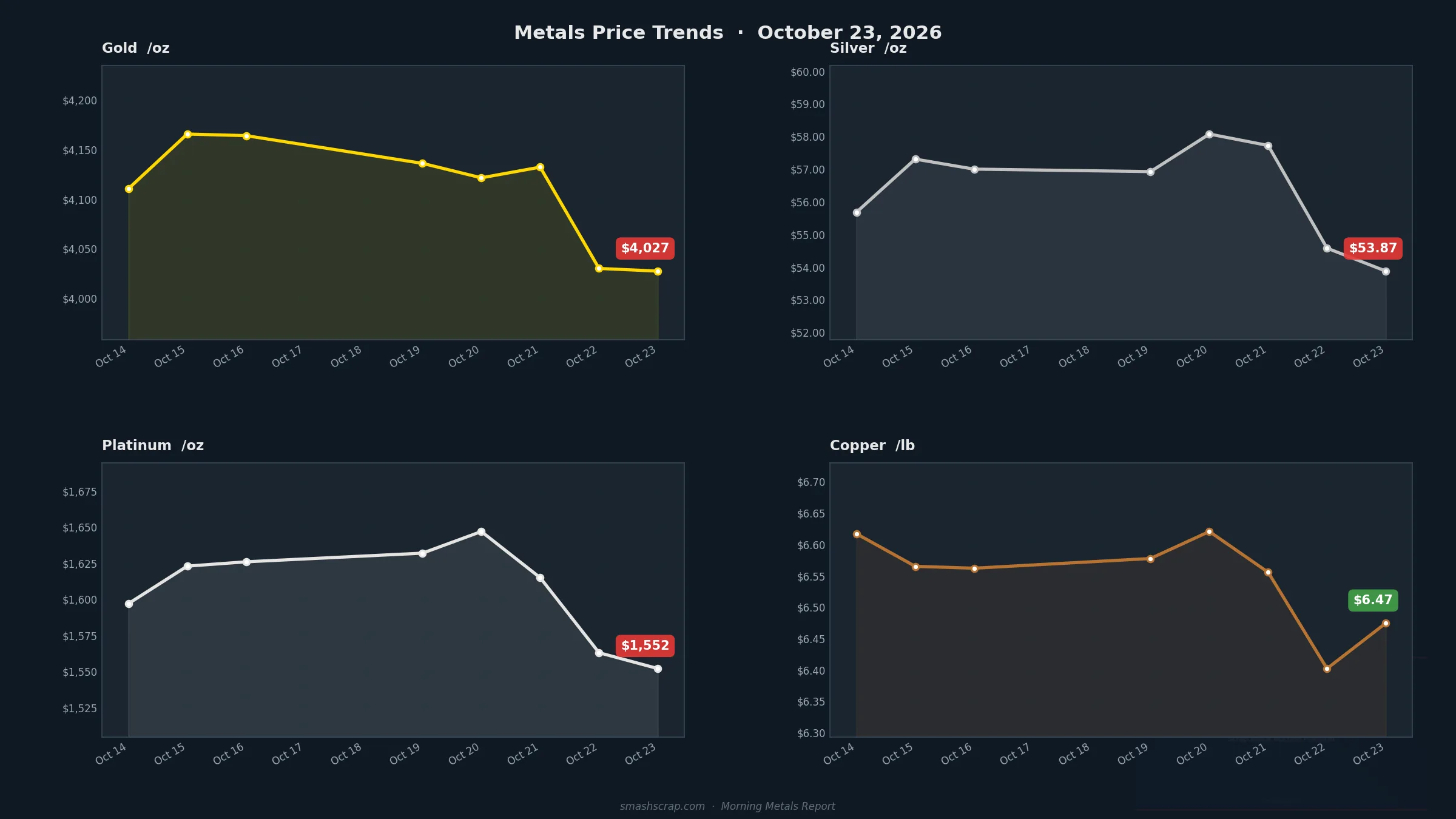
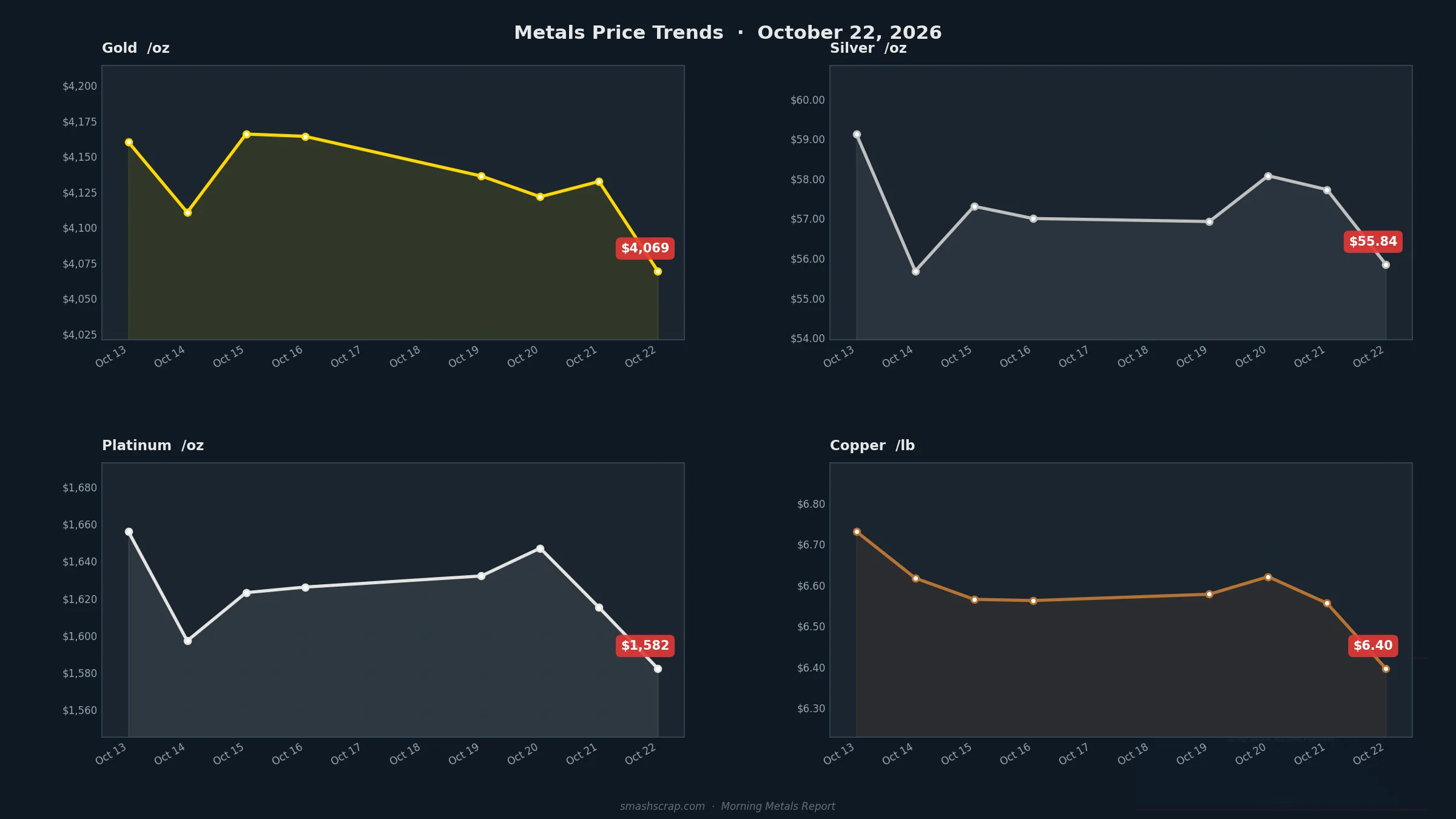
The biggest story this month is the selloff in precious metals. Silver has dropped 16.4% over the past 30 days to $53.88 per ounce, and palladium has fallen 16.9% to $1,037 per ounce — the sharpest declines in the metals complex. Platinum is not far behind, down 11.3% to $1,553 per ounce. Even gold, which tends to be more resilient, is off 6.1% at $4,026.60 per ounce.
The one bright spot in the precious metals space is rhodium, which is essentially flat at $9,150 per ounce, making it the strongest performer in that category by a wide margin.
On the industrial side, the picture is more mixed:
- Copper: $6.47/lb, down 4.7% — holding up better than most base metals
- Aluminum: $1.37/lb, down 7.2% — facing meaningful selling pressure
- Zinc: $1.69/lb, down 7.0% — tracking aluminum lower
- Nickel: $7.23/lb, down 2.8% over 30 days but up 5.0% over the past five days
- Lead: $0.85/lb — broadly stable
- Steel scrap: $366/mt — unchanged
- Shredded scrap: $413/mt — unchanged
Steel is the clear anchor in this market. Both steel scrap and shredded scrap prices have not moved, providing a reliable baseline for ferrous operators while other metals swing around them.
What Is Driving These Moves
The primary culprit is oil. Crude has climbed to roughly $114 per barrel following supply disruptions linked to attacks on Saudi infrastructure. Higher energy costs hit smelters, mills, and recyclers directly, squeezing margins throughout the supply chain. But the ripple effects go further than operating costs.
Rising oil prices are stoking inflation concerns, which in turn is pushing back expectations for interest rate cuts. When rates are expected to stay higher for longer, investors tend to rotate out of non-yielding assets like gold and silver. That is exactly what we are seeing right now — institutional money moving away from precious metals, adding downward pressure on top of an already cautious macro environment.
For industrial metals, demand fundamentals are doing a lot of the heavy lifting in determining which materials hold up and which do not. Copper continues to benefit from long-term infrastructure spending, electrification projects, and steady industrial demand, which explains why it is outperforming aluminum and nickel despite the broader headwinds. Aluminum and zinc, meanwhile, are feeling the squeeze from softer manufacturing activity in key markets.
Nickel's five-day rebound is worth watching but should be treated with caution. It may reflect short-covering — traders closing out bearish bets — rather than a genuine improvement in demand. Supply concerns and elevated inventories have not gone away, so do not read too much into that short-term bounce just yet.
Key Takeaways
- Precious metals are under significant pressure. Silver and palladium have each fallen nearly 17% in 30 days. Momentum remains weak across the board, with rhodium the only exception.
- Steel is the most stable material in the current market. Both steel scrap and shredded scrap are unchanged, offering predictability for ferrous-focused operations.
- Copper is outperforming other base metals thanks to sustained demand from infrastructure and electrification sectors.
- Aluminum and zinc are facing selling pressure tied to softer manufacturing demand and rising energy costs.
- Oil at $114/barrel is the macro wildcard. Energy cost increases are squeezing margins and delaying rate cut expectations, which is hurting non-yielding metals.
- Nickel's recent five-day gain may not signal a lasting recovery. Treat it with caution until confirmed by broader demand signals.
What This Means for Scrap Sellers
If you are sitting on silver-, platinum-, or palladium-bearing material — catalytic converters, electronics, industrial equipment — now is not the time to wait for a rebound. Prices and momentum are both working against you. Moving that material sooner rather than later is the prudent play while you still have pricing clarity.
For ferrous operators, the stability in steel and shredded scrap prices is actually an opportunity. While other markets are volatile, you have predictable benchmarks to plan around. Lock in transactions where you can.
Copper sellers are in a relatively better position than most. Demand fundamentals are intact, and the 4.7% dip may attract buyers who see value at current levels. If you have copper inventory, this is a market where competitive bidding can still work in your favor.
For aluminum and zinc, watch energy markets closely. If oil prices stabilize or pull back, those metals could recover some ground — but until that signal appears, avoid speculative holds on large inventories.
List Your Scrap on SmashScrap.com Today
In a volatile market, getting your material in front of the right buyers at the right moment makes all the difference. SmashScrap.com connects scrap yards, industrial sellers, and recyclers with a nationwide network of qualified buyers through a transparent, competitive auction process. Whether you are moving ferrous tonnage, copper lots, or precious-metal-bearing material, listing on SmashScrap puts you in control of the sale. Create your free listing today and let the market come to you.