
Platinum Surges in Miami | Best Price for Scrap Metal
Weekly Scrap Metal Market Recap — Week Ending July 5, 2026
If you're trying to get the best price for scrap metal in Miami right now, the market is giving you a lot to watch. Precious metals moved sharply this week. Tariff noise is still grinding on steel and aluminum sentiment. And platinum — one of the most valuable materials sitting inside catalytic converters — broke through resistance levels that scrap yards should not ignore.
Here's what happened this week, what it means for your loads, and what to track heading into next week. No fluff. Just the signals that matter to yards, brokers, and buyers across the Southeast and beyond.
Precious Metals Surge — Platinum and Gold Lead the Week
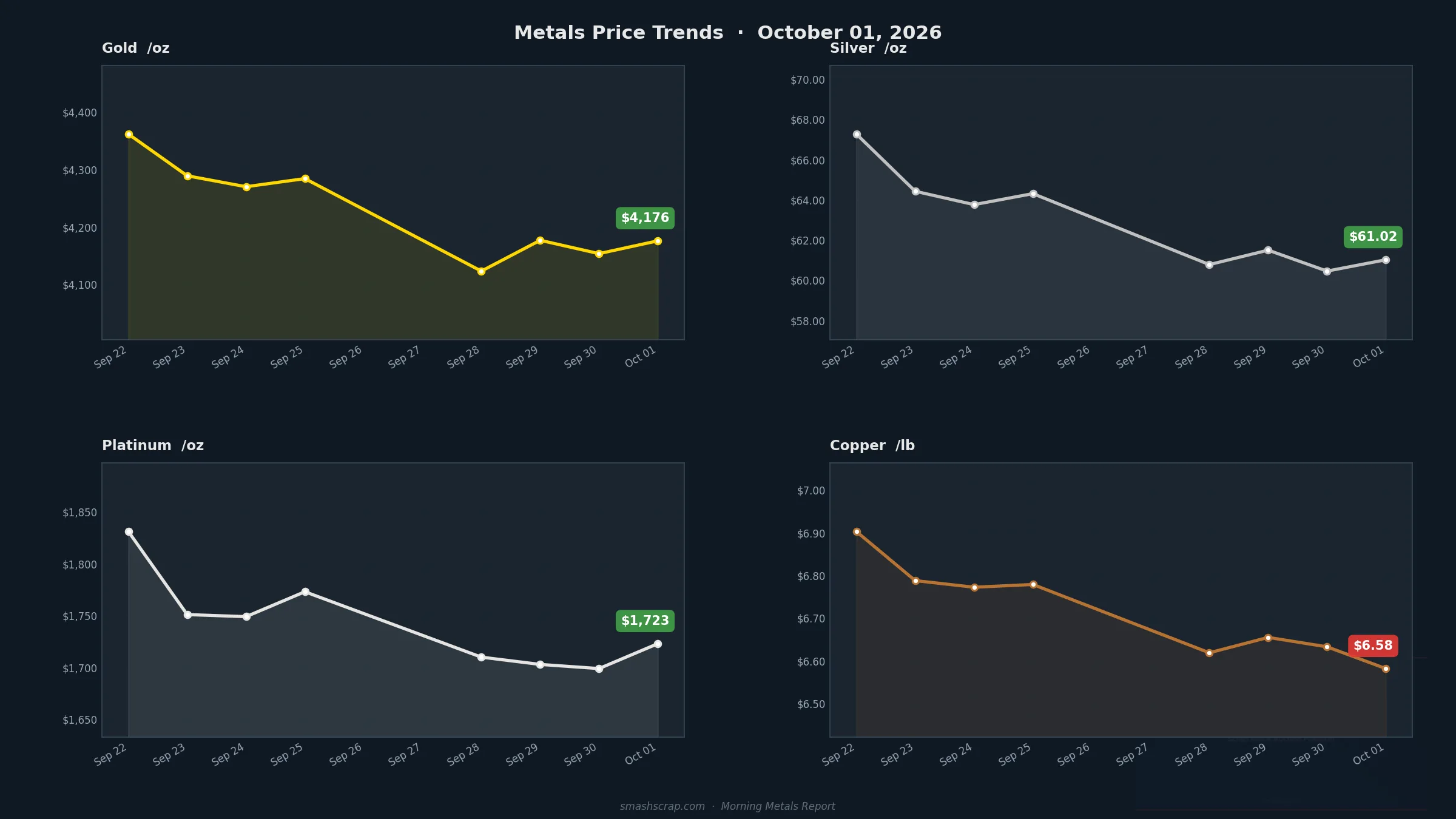
Platinum was the standout mover this week. Spot platinum traded around $1,638/oz bid, up roughly $22 on the day — a gain of over 1.3%. Intraday charts showed the metal breaking above prior resistance near $1,612/oz and testing the $1,673/oz range. That kind of buying pressure, late in the week, signals real conviction — not just noise.
Gold also had a strong week. Prices pushed close to $4,200/oz after weaker-than-expected jobs data on Thursday softened the case for near-term rate hikes. When the dollar slips and hike expectations get pushed out, gold moves. HSBC analysts publicly stated they anticipate further upside for gold by year-end. State Street went further — their baseline scenario puts gold as high as $5,500/oz by Q1 2027. That's not a fringe call anymore. That's a major institution putting a number on the table.
Silver tracked gold higher, supported by safe-haven flows, though industrial demand concerns are still a headwind for silver's upside. The jobs number gave precious metals a tailwind heading into the long Fourth of July weekend.
What this means for scrap yards: If you're sitting on platinum-bearing catalytic converters — including foreign cats, pre-cats, and DPF units — this week's price action is directly relevant to what those units are worth. Platinum prices at this level make documentation and competitive selling more important, not less. Guessing your price in a phone call to a single buyer is the wrong move when platinum is breaking resistance. A scrap metal auction online puts your cats in front of vetted buyers who are watching the same charts you are.
Tariff Uncertainty Keeps Steel and Aluminum Markets on Edge
The WSJ Basic Materials Roundup flagged trade policy and tariff measures as a central driver of sentiment this week in steel and aluminum. Market participants are watching closely for any revisions to existing import duties and safeguards. No major new announcements dropped this week — but the monitoring posture alone is telling. When buyers and sellers are both watching for a tariff headline, price discovery gets distorted.
What that means practically: contract negotiations in the metals supply chain, including scrap, are sensitive right now. A single policy shift can reprice a load before it ships. That's not a reason to sit on inventory — it's a reason to sell into competition when you can, so the market sets your price instead of one buyer's mood on a Friday afternoon.
Base metals overall showed mixed performance. Manufacturing and construction demand signals described as uneven — not a collapse, but not the kind of broad physical tightness that drives sustained price rallies. Logistics and energy costs continue to pressure production economics across bulk materials, with some producers cautioning on output guidance heading into the back half of 2026.
For Miami yards specifically: South Florida's port exposure makes tariff headlines more immediate than they are for inland yards. When import duty structures shift on steel or aluminum, the local market in Miami feels it faster. Watch the headlines, and make sure your loads are positioned competitively before any announcement lands. Platforms like SMASH Scrap — North America's B2B scrap metal auction platform give you a real-time window into what vetted buyers will actually pay — not what one buyer tells you they'll pay.
Supply Side: Mining Constraints and Corporate Caution
Supply disruptions remain a background factor across several metals. This week's industry coverage pointed to regulatory and energy challenges in key mining regions as a supportive factor for certain metals — though no acute, named outages were confirmed in the available data. The signal here is directional: supply isn't growing fast. For scrap, that matters, because secondary supply fills gaps that primary production can't.
On the corporate side, mining and metals firms are in capital discipline mode. The themes this week:
- Optimizing capital spending in the face of uncertain demand trajectories
- Strengthening balance sheets ahead of potential market volatility
- Watching for M&A activity and asset sales as companies reshape portfolios
- Monitoring producer volume guidance and input cost commentary ahead of earnings season
None of these are panic moves — but they reflect a metals sector bracing for choppiness in the second half of 2026. For scrap sellers, that environment rewards preparation: documented inventory, photo evidence, serial tracking, and multiple buyers competing are all tools that protect your position when markets get volatile. That's exactly what the SMASH scrap metal marketplace is built to deliver.
If you want to stay current on how corporate moves and supply shifts affect scrap pricing, read the latest scrap industry news on the SMASH blog — updated regularly with analysis that's relevant to yard operators, not just commodity traders.
What to Watch the Week of July 7, 2026
Heading into next week, here are the signals worth tracking if you're trying to time loads or plan pricing conversations:
- Platinum momentum: Whether $1,638/oz holds or continues pushing toward $1,673/oz will tell you a lot about where cat values are heading. A sustained break above that range would be meaningful for high-grade platinum-bearing material.
- Gold and the dollar: If the weak jobs data from Thursday keeps rate hike expectations suppressed, gold could test new highs. Watch dollar index movement — it's the fastest tell on gold direction short-term.
- Tariff announcements: Any executive action or agency guidance on steel/aluminum import duties will move the market fast. Set news alerts. Don't get caught holding inventory when a headline reprices your load.
- Earnings season ramp: Major materials companies begin reporting in mid-July. Volume guidance and cost commentary from large producers will shape buyer sentiment for the following weeks.
- Fed language: Any Federal Reserve speakers scheduled next week could shift rate expectations again. Precious metals are sensitive. Base metals less so, but macro tone matters for overall risk appetite.
In short: this is not a week to go passive. The inputs are moving. Yards that document their inventory, list with competition, and track buyer interest will be better positioned than yards that call one buyer and hope for the best.
Why Competitive Auctions Matter More in Volatile Markets
When prices are stable, the gap between a negotiated deal and a competitive auction is small. When markets are moving — platinum up 1.3% in a single session, gold pushing toward $4,200, tariff headlines dropping without warning — that gap widens fast. The buyer on the other end of your phone call knows where platinum closed this week. The question is whether you're extracting that value or leaving it behind.
That's the core problem with the old way: one call, one offer, one price. No visibility into whether that offer reflects the market or reflects what one buyer thinks they can get away with. More buyers competing means better price discovery. That's not a marketing line — it's how auctions work.
SMASH runs a B2B scrap metal marketplace built specifically for this. Vetted buyers. Competitive bidding. Photo documentation and serial tracking built into the listing process. Auto-invoicing when a load sells. No subscription fees — we only earn when you do. If you operate yards in Miami or anywhere across the Southeast, the setup is straightforward and the process is built around how scrap actually moves.
And if end-of-life vehicles are part of what flows through your operation, get free scrap car pickup across Canada through our sister platform — a resource worth knowing when cross-border materials or referrals come up in conversation.
Disclaimer: Metal prices referenced in this recap are based on available market data for the week ending July 5, 2026. Scrap metal values fluctuate daily based on spot prices, grade, volume, and buyer demand. Always verify current rates before pricing or listing a load.
Frequently Asked Questions
Q: How do I get the best price for scrap metal in Miami right now?
The fastest way to get a competitive price is to stop relying on a single buyer. List your material through a scrap metal auction online where multiple vetted buyers bid against each other. Document your loads with photos, weights, and serial tracking — buyers pay more for material they can trust. Platforms like SMASH are built specifically for this kind of competitive B2B selling.
Q: What does scrap trading mean in a B2B context?
Scrap trading refers to the buying and selling of processed or unprocessed scrap metal between businesses — yards, processors, brokers, and end buyers like mills or smelters. In a B2B scrap metal marketplace, transactions happen between verified commercial parties, typically at volumes and grades that wouldn't apply to individual consumers. The auction format brings price transparency that traditional brokered deals often lack.
Q: How much is metal scrap worth per pound in Miami?
Per-pound values in Miami vary significantly by material — copper, aluminum, steel, and catalytic converter grades each have their own pricing drivers. Platinum-bearing cats are especially sensitive to spot precious metal prices, which moved sharply this week. Prices fluctuate daily — check current rates directly with buyers or through a live marketplace. Never lock in a price based on week-old quotes when markets are moving.
Q: Is a scrap metal auction online right for larger commercial loads?
Yes — the SMASH auction format is built for commercial volumes, not individual consumers. Whether you're moving a pallet of cats, a truckload of non-ferrous, or a mixed load of cores and industrial material, the auction structure creates competition among buyers who are actively sourcing at scale. Documented inventory with photos and BOLs gives buyers more confidence, which typically supports stronger bids.
Q: How does SMASH handle pricing transparency for scrap sellers?
SMASH shows you what buyers are actually willing to pay — not an estimate, not a broker's margin-adjusted offer. The auction format means multiple buyers see your listing and compete in real time. Combined with photo documentation, VIN lookup for vehicle-sourced material, and serial tracking for high-value items, sellers go into every transaction with full visibility into what the market says their material is worth.
List your scrap on SMASH today — register for free at smashscrap.com. No subscription fees. No guesswork. Just competition.
Follow SMASH on LinkedIn for weekly market updates, scrap pricing trends, and industry insights — delivered straight to your feed.