Richmond Yard Owner Doubles Profits With Online Scrap Sales
Most yard operators in Richmond, Virginia don't realize how much they're giving up until they try something different. Marcus T. ran a mid-sized salvage and recycling operation off Route 1 south of the city. He'd been selling bulk non-ferrous loads — copper, aluminum, brass, catalytic converters — the same way for over a decade. One buyer. One phone call. One price. He thought that was just how the business worked. Then he listed a mixed load on SMASH Scrap — North America's B2B scrap metal auction platform and changed how he thought about online scrap metal sales entirely.
This is his story. The details are anonymized, but the situation is real.
---The Setup: A Good Yard Running on an Outdated System
Marcus had built his yard from the ground up. He knew his material. He sorted properly, documented his loads with photos, tracked his catalytic converters by serial number. His operation was cleaner and more organized than most. But his selling process hadn't evolved.
He had a relationship with a regional buyer who'd been purchasing his non-ferrous loads for years. That buyer knew Marcus trusted him. And that trust — while it felt like loyalty — was costing Marcus real money. When Marcus asked about price, he got a number. He had no way to know if that number was competitive. He had no leverage. He had no comparison.
"I thought the relationship meant I was getting looked after," Marcus said. "But a relationship isn't the same as a fair market price. I was getting consistent, sure. I wasn't necessarily getting what the load was worth."
His typical loads were substantial — mixed copper wire, clean aluminum extrusions, a regular stream of catalytic converters pulled from vehicles processed at his yard. He had the volume to attract serious wholesale scrap metal buyers. He just wasn't reaching them.
---What Triggered the Change: A Conversation About Scrap Metal Prices Today
The turning point came at a regional recycling industry event. Marcus got talking with another operator — a woman who ran a yard in the Tidewater area — who mentioned she'd started using an auction-based platform to move her bulk non-ferrous. She wasn't specific about numbers, but she said something that stuck with him: "I finally stopped guessing and started knowing."
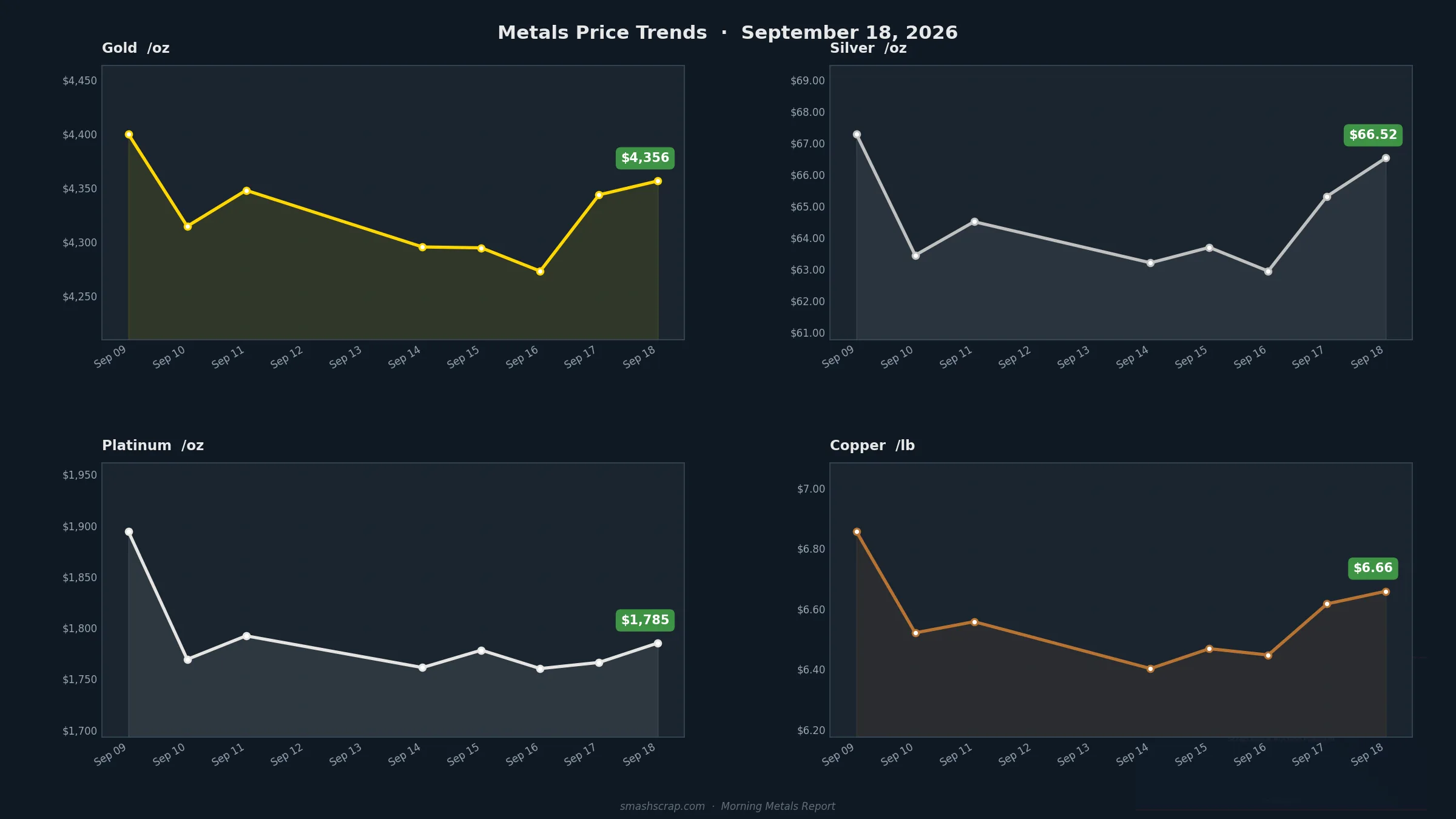
Marcus went home and started looking into scrap metal prices today from multiple sources. He realized he'd been anchoring his expectations to a single buyer's quotes without any market context. He didn't know what his copper wire was fetching from buyers in other regions. He didn't know if his cats were priced at regional market or below it. He was flying blind, and he'd been doing it for years.
He found SMASH through a search, read through how the platform worked, and decided to run a test. He wasn't ready to abandon his existing buyer — but he wanted a benchmark. He wanted to see what competition actually looked like.
For the latest context on where markets are moving, he also started regularly checking resources like the latest scrap industry news on the SMASH blog to track price direction and buyer activity across North America.
---The Process: Listing a Real Load and Letting the Market Speak
Marcus's first listing on SMASH was a mixed non-ferrous load: clean copper tubing, a quantity of insulated copper wire, and a batch of domestic catalytic converters he'd been sitting on — waiting for the right moment to move.
The process was more structured than he expected. Here's how it broke down:
- Inventory documentation: Marcus uploaded photos of the sorted material. SMASH's inventory tool walked him through documenting the load clearly — weights, grades, condition. His cats got serial number tracking, which gave buyers confidence in what they were bidding on.
- Buyer access: The load went in front of vetted buyers. Not random inquiries — actual wholesale scrap metal buyers who'd been qualified through the platform. That mattered to Marcus. He didn't want tire-kickers wasting his time.
- Auction format: Buyers competed. Marcus watched bids come in from buyers he'd never dealt with, in markets he'd never accessed directly. Some were local to Virginia. Others weren't. The geographic spread surprised him.
- Transparency: He could see bid activity. He knew where the market was landing in real time — not as a number handed to him by one person with their own margin interests.
He didn't need to cold-call anyone. He didn't negotiate with a single buyer who had all the information advantage. He listed the load, documented it properly, and let the auction do the work.
"The part that got me was the cats," Marcus said. "I'd been moving cats the same way forever. When I saw what competitive bidding looked like on a properly documented batch — serial numbers, photos, weights — it was an education."
---The Outcome: Price Discovery Changes Everything
Marcus won't share exact figures — that's his business — but he's clear about what the experience revealed. The benchmark he got from his first SMASH auction gave him information his existing buyer relationship never had. He now knew what the market thought his material was worth.
He didn't blow up his existing relationships overnight. That's not the point. But he started using SMASH as a regular pricing check — and in some cases, for loads he specifically wanted to move competitively, he listed exclusively on the platform.
A few things changed in his operation as a result:
- He started sorting more aggressively. Documented, graded material performs better in auction. The extra sorting time paid off in buyer confidence and bid quality.
- His cat tracking tightened up. Serial number documentation became a standard part of his process, not just a SMASH requirement. It made his whole operation cleaner.
- He stopped guessing. Knowing what the market is actually willing to pay — not just what one buyer is willing to offer — changed how he evaluated every load.
- He diversified his buyer pool. He now has relationships with multiple buyers, some of whom came through the SMASH platform. His exposure to the market is broader than it was two years ago.
"Nobody tells you that you're giving up margin when you work with one buyer long enough. The relationship feels safe. But the market doesn't care about your relationship," Marcus said. "Competition is what actually tells you what something's worth."
If you're running a yard in the Richmond area and haven't explored what vetted buyer competition looks like on your loads, it's worth taking an honest look. You can explore the SMASH scrap metal marketplace and see how the platform works before you commit to anything.
---What Yards Like Marcus's Can Learn About Selling Scrap Metal in Bulk in Richmond
Richmond's industrial corridor and active demolition and construction activity means there's consistent material moving through yards in this region. The challenge isn't supply. It's access to buyers who will pay what that material is actually worth on any given day.
When you sell scrap metal in bulk in Richmond, you're not just competing locally. Non-ferrous material — copper, aluminum, catalytic converters, brass, stainless — moves nationally. Your buyer pool shouldn't be limited to who you know or who calls you first. That's a structural disadvantage, and most operators don't think about it until they see what real competition looks like.
A few things Marcus's story reinforces for any yard operator considering their options:
- Documentation matters more than you think. Buyers bid with more confidence when they can see exactly what they're buying — weights, photos, grades, serial numbers on cats. Documented loads attract better bids.
- One buyer is not a market. It's a relationship with someone who also has margins to protect. That's not a criticism — it's just math. Competition is what reveals price.
- No subscription fees means no barrier to trying. SMASH doesn't charge to list. The platform only wins when the seller wins. There's no reason not to run a test load and find out where the market actually is.
- Vetted buyers protect your time. You're not fielding calls from random inquiries. SMASH buyers are qualified before they bid. That changes the quality of the interaction entirely.
If you're asking how much is scrap metal bringing per pound right now — and you should be asking that regularly — the honest answer is that the market tells you more than any single quote will. Auctions are how you find out.
For anyone in the auto recycling space specifically, it's also worth knowing that SMASH connects to the broader scrap vehicle ecosystem. Check out getmyscrapcar.com for resources on the vehicle side of the recycling chain.
---The Bottom Line on Online Scrap Metal Sales
Marcus's situation isn't unusual. It's the default for most yards that have been operating the same way for a long time. The single-buyer model feels stable — until you see what you've been leaving behind.
Online scrap metal sales aren't about replacing relationships. They're about adding information. Knowing what the market is willing to pay gives you leverage you didn't have before. That's it. That's the whole game.
If Marcus's story sounds familiar — if you're running loads through one or two buyers and wondering whether you're getting the real market — the answer is simple. List a load. See what happens. You'll learn more from one auction than from a dozen phone calls to buyers who already know more than you do.
No subscription. No guesswork. Just competition.
---Frequently Asked Questions
Q: How does online scrap metal sales work for bulk loads in Richmond, Virginia?
You document your load — photos, weights, grades, serial numbers for cats — and list it on an auction platform like SMASH. Vetted buyers across North America bid competitively. You review offers and accept the best one. It works the same whether you're in Richmond, Virginia or anywhere else in the U.S., and it gives you real price discovery instead of a single buyer's quote.
Q: How much is scrap metal bringing per pound right now?
Prices shift daily based on commodity markets, export demand, and regional supply. Copper, aluminum, and catalytic converter prices all move independently. The best way to know what your specific material is worth right now is to list it competitively and let buyers tell you — that's exactly how SMASH works. Always check current market rates before committing to a sale, as prices fluctuate.
Q: What types of material can I sell in bulk on SMASH?
SMASH handles non-ferrous metals including copper, aluminum, brass, and stainless, as well as catalytic converters with serial tracking. Ferrous bulk loads are also supported. If you're moving consistent volume from a yard operation in Richmond or anywhere in Virginia, the platform is built for that scale.
Q: Are there fees to list scrap metal on SMASH?
SMASH does not charge subscription fees. The platform operates on a success-based model — they only earn when a sale happens. That means there's no financial risk in testing a load to see what the market looks like before committing to anything.
Q: How do I find wholesale scrap metal buyers who will actually pay competitive prices?
The fastest way is through a platform that already has a vetted buyer network. SMASH qualifies buyers before they can bid, which filters out low-quality inquiries and connects your loads with buyers who are serious and ready to transact. Cold-calling regional buyers individually puts you at an information disadvantage — you're negotiating without knowing what anyone else would pay.
---Ready to find out what your loads are actually worth? List your scrap on SMASH today — register for free at smashscrap.com. No subscription. No guesswork. Just competition.
Follow SMASH on LinkedIn for scrap metal market insights, industry news, and platform updates delivered straight to your feed.