Sell Scrap Metal in Bulk Nashville: July 26 Market Recap
Oil spiked 7% on the week. Gold held above $4,000. And a scrap yard fire in Longview, Oregon put air quality and community safety front and center for the industry. If you sell scrap metal in bulk Nashville or anywhere across Tennessee, this was a week worth paying attention to. Here's what moved markets, what made headlines, and what to watch heading into next week.
Macro pressure on commodity markets didn't ease up this week — it accelerated. Energy costs climbed. Freight risk rose. And structural signals out of global steel markets are starting to point toward tighter scrap supply down the road. Let's break it down.
---1. Oil Surges 7% on U.S.–Iran Tensions — Freight and Input Costs Feel It
The biggest macro story this week wasn't a metals report — it was oil. Crude prices jumped more than 7% on the week as fresh U.S.–Iran military clashes raised serious concerns about Strait of Hormuz access. Tanker traffic slowed. Supply route risk spiked. And energy markets repriced fast.
For scrap yards, this matters more than most people track. Higher fuel costs hit your haul rates, your processing costs, and your outbound freight quotes — especially on large loads moving cross-country. If you're shipping bulk ferrous or non-ferrous out of Tennessee to end markets, your trucking partners are already adjusting. Expect that to show up in quotes early next week.
J.P. Morgan had previously cut its 2026 Brent forecast to $86 (Q3) and $80 (Q4). This week's escalation puts those forecasts under pressure. Watch the Strait of Hormuz situation carefully — if tanker flows normalize, oil could retreat. If tensions hold, input and logistics costs stay elevated for the next several weeks.
What it means for sellers: If you're sitting on loads you were planning to move in August, don't assume freight rates will get better on their own. Lock in buyers now. On SMASH Scrap — North America's B2B scrap metal auction platform, vetted buyers compete for your material — which helps offset the freight pressure by letting the market find a real clearing price, not just whatever one buyer is willing to offer this week.
---2. Gold Holds Above $4,000 — What Precious Metal Strength Means for Catalytic Converter Sellers
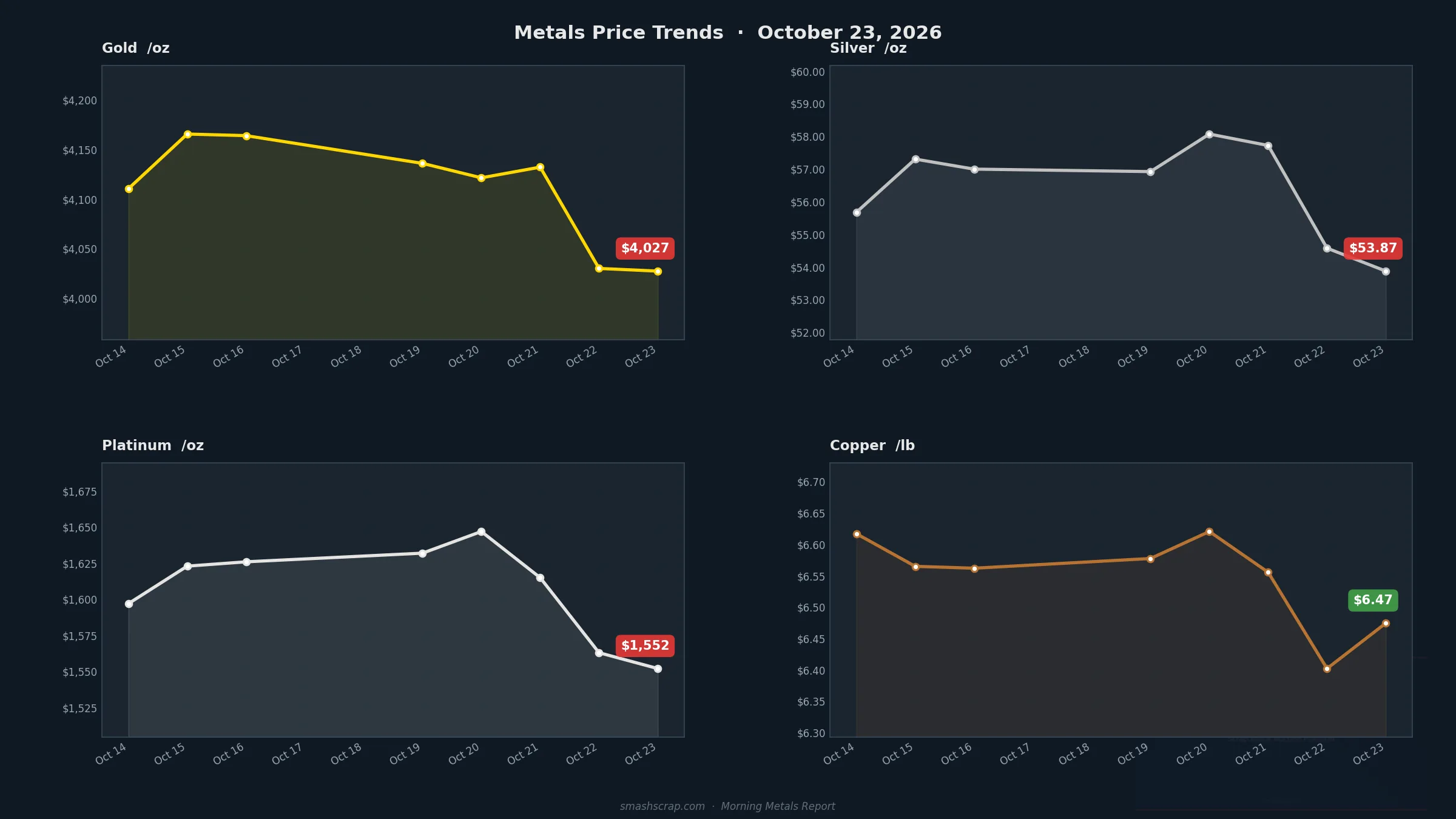
Gold futures are holding near $4,050 this week. Analysts are watching $4,000 as a potential inflection point — some are calling for a move toward $6,000 driven by U.S. debt dynamics and continued global demand. China's June gold imports hit a two-year high at 173 tonnes, and BlackRock is still recommending a modest gold allocation. Physical demand remains a floor even when futures soften.
Gold held above $4,000 despite what was a brutal Q2 — futures fell more than 13% in Q2 2026, the worst quarterly performance since 2013. That it's holding this level with that kind of recent history behind it says something about underlying demand fundamentals.
Here's the direct connection for scrap professionals: catalytic converters contain platinum, palladium, and rhodium — not gold, but all precious group metals (PGMs) that tend to correlate with broader precious metal sentiment and industrial demand signals. When precious metals markets are active and buyers are engaged, PGM-based pricing tends to reflect that. If you're holding a volume of cats and waiting for the right moment to sell, the current precious metal environment is worth factoring into your timing.
If you want to sell catalytic converters online to vetted buyers with documented inventory and transparent pricing, explore the SMASH scrap metal marketplace — serial tracking, photo documentation, and a competitive auction format mean your cats aren't getting lowballed by a single buyer on a slow afternoon call.
---3. Longview Scrap Fire — An Industry Safety and Liability Wake-Up Call
A major scrap yard fire in Longview, Oregon triggered shelter-in-place warnings and an air quality advisory for the surrounding community this week. Multiple outlets — including KGW, OregonLive, KATU, and KPTV — covered the story as smoke from the burning scrap pile spread across residential areas. Authorities issued stay-indoors warnings as a precaution.
This isn't just a regional story. Scrap fires are a known operational risk, and when they happen at this scale, they draw regulatory attention fast — not just locally, but at the state and federal level. Environmental agencies track these events. Insurance underwriters track these events. And community relations for the broader recycling industry take a hit every time a fire of this magnitude makes the news cycle.
For yard operators in Tennessee and across the South, this is a reminder to audit your fire prevention protocols, your material segregation practices, and your documentation. If you're moving material through a documented, traceable system — with photo records, inventory logs, and proper BOLs — you're in a much better position if regulators come knocking or an incident triggers a review of your operation.
For more on industry news, incidents, and market updates, read the latest scrap industry news on the SMASH blog.
---4. India's Scrap Demand Surge — A Global Supply Signal for B2B Scrap Metal Markets
India's core sector output grew 5% year-over-year in June — the fastest pace in five months. Iron ore production alone jumped 43.9%. Steel and construction demand is running hot. And India is actively exploring scrap steel as a route to decarbonize its steel sector as metallurgical coal imports tighten.
A BusinessLine report this week flagged something the scrap industry should be paying attention to: organized metal recycling in India is gaining real momentum, with the potential to drive the country's next major commodity cycle. India's steel capacity is expanding rapidly, and scrap — both domestic and imported — is increasingly being positioned as a strategic input, not just a secondary material.
Why does this matter for B2B scrap metal Tennessee sellers and U.S. yards broadly? Global scrap demand shapes domestic pricing. As India and other developing steel markets absorb more scrap, export demand can tighten domestic supply and put upward pressure on prices in U.S. markets. This isn't immediate — it plays out over quarters, not days — but it's a structural tailwind worth understanding if you're making decisions about when and how to sell your material.
The old model of calling one domestic buyer and taking whatever they offer doesn't account for global demand dynamics. Scrap metal trading online through a competitive auction format does — because it surfaces what multiple buyers are actually willing to pay, right now, in the current market.
---What to Watch Next Week
Heading into the first week of August 2026, here are the signals worth tracking:
- Hormuz / oil: Watch whether tanker traffic normalizes or tensions escalate further. This directly impacts freight costs and metals supply risk pricing.
- Gold and PGMs: If gold holds $4,000 and macroeconomic data softens, watch for a move higher. That feeds through to cat converter valuations.
- Steel and ferrous scrap: India's strong industrial output data combined with coal supply tightening could lift domestic scrap demand in their market. Watch for global ferrous pricing to reflect that.
- Regulatory follow-through from Longview: Environmental regulators at the state level may respond with increased scrutiny of scrap yard operations across the region. Expect guidance or inspection activity in the Pacific Northwest first, but don't assume it stays regional.
- Fed positioning: Dollar strength has been a headwind for metals. Any shift in rate expectations next week could move precious and base metal prices sharply in either direction.
If you're a yard operator in Nashville or anywhere across Tennessee trying to make sense of how these macro signals translate to your next load, the answer isn't to guess. Put your material in front of multiple vetted buyers and let competition do the work. That's what sell scrap metal online USA looks like when it's done right.
---Frequently Asked Questions
Q: How do global commodity market moves affect scrap metal prices in Nashville?
Global commodity markets — particularly oil, steel, and precious metals — feed directly into local scrap pricing. Oil prices affect freight and processing costs. Steel demand signals from markets like India affect ferrous scrap valuations. Precious metal prices influence what buyers pay for catalytic converters and non-ferrous material. Nashville yards aren't isolated from these forces — they're directly exposed to them.
Q: Is it worth trying to sell scrap metal in bulk Nashville through an online auction instead of a local buyer?
If you're moving volume, a single local buyer gives you one data point — their number on that day. An online auction platform puts your load in front of multiple vetted buyers who compete for it, which gives you better price discovery and a real market reference. For bulk sellers, that difference adds up over time. More buyers means the market has a chance to reveal what your material is actually worth.
Q: How does selling catalytic converters online work, and is it safe?
On a platform like SMASH, you document your cats with photos, serial numbers, and unit counts before listing. Vetted buyers bid competitively, and you get a clear offer without cold-calling processors or guessing at value. The documentation process also protects you — serial tracking and photo records create an auditable chain of custody, which matters both operationally and for compliance purposes.
Q: What should Nashville scrap yards watch for after the Longview, Oregon scrap fire this week?
Scrap fires of this scale tend to prompt regulatory attention at the state and federal level — not just in the region where the incident occurred. Tennessee yards should review their fire prevention protocols, material segregation practices, and documentation standards. Good recordkeeping and documented inventory management are your best protection if regulators increase scrutiny of scrap operations in the months ahead.
Q: Does rising oil price affect my scrap metal sale price in Tennessee?
Not directly in the spot price, but it hits your net realized value through freight and logistics costs. When oil spikes — like this week's 7% move — trucking partners reprice haul rates quickly. If you're shipping large loads of ferrous or non-ferrous material out of Tennessee, those freight costs come out of your margin. Locking in a buyer before freight rates adjust further is one way to protect your position.
---List your scrap on SMASH today — register for free at smashscrap.com. No subscription fees. No guessing. Just competition, transparency, and buyers who are actually ready to buy.
If you move vehicles as part of your recycling operation and need a reliable end-of-life vehicle solution north of the border, get free scrap car pickup across Canada through our affiliated service.
Follow SMASH on LinkedIn for weekly market recaps, scrap industry news, and pricing insights that actually matter to yard operators: follow SMASH on LinkedIn.