Fort Wayne Scrap Yard Breaks Free From Bad Pricing
One buyer. One price. No leverage. That was the reality for a mid-sized recycling operation just outside Fort Wayne, Indiana — until they tried a different approach to moving their non-ferrous loads.
This is a real story. The yard asked to stay anonymous, so we've changed the name. But the situation, the process, and the results are authentic. If you're working with wholesale scrap metal buyers in Fort Wayne the old-fashioned way — one call, one offer, take it or leave it — this one's worth reading.
The Situation: A Busy Yard with a Pricing Problem
Call the owner Dave. He runs a recycling yard about 15 minutes south of Fort Wayne with a crew of eight and a solid book of commercial accounts — auto shops, HVAC contractors, a couple of light industrial clients. The yard moves a consistent volume every month: mixed copper, aluminum extrusion, die-cast, and a rotating pile of catalytic converters from their automotive buy program.
Dave wasn't struggling. But he had a nagging feeling he was leaving money on the floor.
"We had two buyers we called regularly," he said. "Good guys. But they both knew we called them. There was no real competition. The price was whatever they told me it was that morning."
That's a common setup in northeast Indiana. The scrap market in the Midwest has deep roots — established relationships, handshake deals, loyalty to the same buyers for years. That loyalty has value. It also has a cost. When you're not testing the market, you don't actually know what your material is worth to someone who wants it badly.
Dave had been reading about scrap metal market trends shifting in 2026 — tighter non-ferrous supply in some regions, increasing demand from secondary smelters, and growing buyer appetite for well-documented loads. He figured it was time to find out what competitive pricing actually looked like for his operation. To stay current, he'd been following the latest scrap industry news and noticed other yard operators talking about online auction platforms.
What He Was Moving — and Why Documentation Mattered
Dave's monthly non-ferrous mix isn't exotic, but it's consistent and reasonably clean. That matters more than most sellers realize. Vetted buyers don't just look at commodity type — they look at contamination risk, moisture, mixed grades, and how well the load is described.
A typical month for his yard included:
- Copper: A mix of bare bright, #1 copper, and some #2 wire — sourced mostly from HVAC jobs and electrical contractors
- Aluminum: Extrusion, die-cast, and some MLC (mixed low-copper aluminum) from auto parts and window frames
- Catalytic converters: 40–80 units per month from their automotive buy program, ranging from domestic cats to a smaller volume of foreign units
- E-scrap: Smaller volumes — circuit boards, power supplies — batched quarterly
Before SMASH, his process for selling was: call buyer one, call buyer two, pick the better number, schedule the pickup. No photos, no weight sheets shared in advance, no serial tracking on converters. Just a verbal description and trust.
"I never thought about what that looked like from the buyer's side," Dave said. "They're taking my word for everything. Of course they price in risk."
That insight — that poor documentation costs the seller money — is one of the most underappreciated dynamics in the scrap business. Buyers aren't being dishonest when they low-ball a vague load. They're pricing uncertainty. Give them certainty, and the number moves.
The Process: Listing on SMASH for the First Time
Dave found SMASH Scrap — North America's B2B scrap metal auction platform through a conversation at a regional recycling association meeting. Another yard operator mentioned they'd started running their converter lots through an online auction and getting stronger price discovery. Dave was skeptical but curious.
He started with a single converter lot — 52 units he'd accumulated over six weeks. Before SMASH, he would've called his usual buyer, described the mix verbally, and taken whatever landed. This time, he used SMASH's inventory tool to document each unit individually: photos, serial numbers where available, physical condition, and a breakdown by converter type.
The process took longer than a phone call. He'd be the first to admit that.
"First time, it probably took me an extra hour compared to just calling someone," he said. "But I was also doing something I'd never done before — actually knowing what I had before I sold it."
SMASH's VIN lookup and serial tracking tools helped him identify units he'd been undervaluing. A few converters he'd been grouping as standard domestic units had serial numbers that cross-referenced as higher-value grades. That's money that was sitting in the pile, invisible, because no one had looked.
Once the lot was listed, vetted buyers on the platform could see the full documentation. The auction ran its course. Multiple buyers placed bids. Dave watched it in real time.
"I didn't expect to feel anything watching bids come in," he laughed. "But it's different when you can see it. You realize: these are real people who actually want what you have. That's what a market looks like."
The Outcome: Better Price Discovery and a Changed Process
We're not going to invent a percentage uplift number here. SMASH doesn't do that, and neither do we. What we can say is what Dave reported: the final bid on his first converter lot came in meaningfully above what his regular buyer had quoted verbally earlier that week for the same material — before he'd documented it properly.
Was that entirely because of the auction format? Partly. Was it because proper documentation reduced the buyer's risk premium? Also partly. Was it because he finally had multiple buyers competing instead of one? Yes.
Competition can help reveal the market. More buyers means better price discovery. That's not a sales pitch — it's how auctions work.
After that first lot, Dave ran three more listings over the next two months: a copper and aluminum mixed load, a second converter lot, and a batch of insulated wire. Auto-invoicing through SMASH eliminated the back-and-forth paperwork he used to handle manually. Buyers on the platform are vetted — he wasn't chasing payment or dealing with tire-kickers.
He still works with his two original buyers. The difference is they know he has other options now. That alone changed the dynamic.
"I'm not loyal to a price. I'm loyal to guys who treat me right and pay fair. Now I actually know what fair looks like."
For yard operators looking to understand how to sell scrap online without blowing up existing relationships, that's the takeaway: SMASH isn't about burning bridges. It's about knowing your number before you pick up the phone.
What the Fort Wayne Market Looks Like Right Now
Fort Wayne sits in a strong position for non-ferrous movement. Northeast Indiana has a dense mix of manufacturing, auto-related businesses, and construction activity that generates consistent scrap volume. The region feeds buyers across the Midwest, with good trucking access to Ohio, Michigan, and Illinois markets.
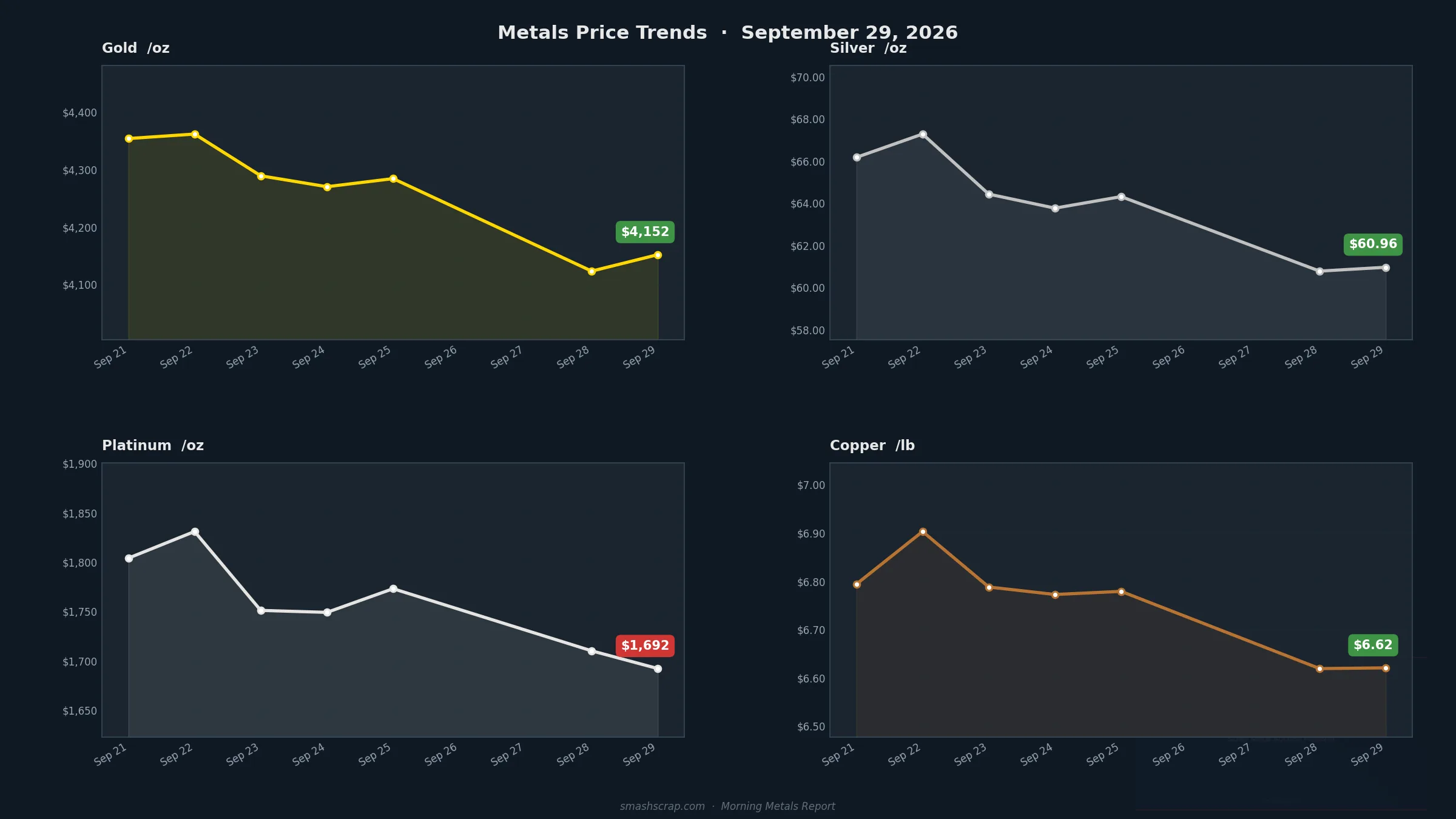
Scrap metal prices today are always moving — copper, aluminum, and converter PGM values shift with global demand, currency, and commodity cycles. As of mid-August 2026, broader commodity signals remain active: gold has been pushing toward record levels as rate-hold bets increase, which tends to lift sentiment across the precious metals complex, including PGMs embedded in catalytic converters. That's not a price guarantee — it's context.
Disclaimer: Metal prices fluctuate daily. Always verify current rates before making buying or selling decisions. Nothing in this article constitutes pricing advice.
What Dave's experience reflects is a broader scrap metal industry trend: the yards that document well, sell competitively, and treat their inventory like an asset — not just a pile to move — consistently put themselves in a better position when markets shift. If you want to understand what's driving that shift, read the latest scrap industry news to stay ahead of the curve.
If you're in Fort Wayne or anywhere across Indiana moving non-ferrous, converters, or mixed loads, the question isn't whether online auctions work. It's whether you can afford to keep guessing your price when the tools exist to find out what it actually is.
What Dave Would Tell Another Yard Operator Today
We asked Dave what he'd say to another mid-sized yard in Indiana sitting on the fence about trying a platform like SMASH. He kept it short.
"List one load. Don't overthink it. Take the photos, use the tools, see what happens. The worst outcome is you learn what your stuff is worth. That's not a bad day."
He also flagged one thing he wished he'd known earlier: the documentation habit pays off beyond the auction itself. Having photo records, weight documentation, and serial tracking on converters has simplified his own internal record-keeping and made BOL prep faster when loads ship.
"It's not just about the sale price," he said. "It's about running a tighter operation. The two things go together."
That's the real story here. Not a dramatic turnaround. Not a yard that was broken and got fixed. Just a solid operation that stopped leaving information — and money — on the table.
If you want to explore the SMASH scrap metal marketplace and see how the platform works for your operation, the barrier to entry is low. No subscription. No monthly fees. SMASH only wins when you do.
And if you're buying or selling and want to talk directly — email jeff@smashscrap.com.
For scrap car leads in the area, getmyscrapcar.com connects sellers with buyers quickly — worth bookmarking if automotive scrap is part of your volume.
Frequently Asked Questions
Q: Who are the main wholesale scrap metal buyers in Fort Wayne, Indiana?
Fort Wayne has an established base of local and regional scrap buyers, including independent yards and representatives of larger processing networks. Beyond local buyers, platforms like SMASH connect Fort Wayne sellers with vetted wholesale buyers across North America — expanding the competitive field beyond whoever answers the phone that day.
Q: How do I find the best price for my scrap metal in Fort Wayne?
The best price comes from competition, not a single quote. Getting multiple buyers to bid on a documented, well-photographed load consistently produces better price discovery than one-call selling. SMASH's auction format is built specifically for that. Check current market rates daily — prices on copper, aluminum, and converters move constantly.
Q: Can I sell catalytic converters online through SMASH?
Yes. SMASH supports converter lot listings with serial tracking, photo documentation, and grade breakdowns — the level of detail that serious buyers want before bidding. Proper documentation reduces the risk premium buyers build into vague lots, which generally helps price discovery. Listings go to a vetted buyer network, not the general public.
Q: Is SMASH free to use for scrap sellers?
There are no subscription fees to list on SMASH. The platform operates on a model where it wins when the seller wins — you're not paying monthly to access buyers. To get started or ask questions, email jeff@smashscrap.com directly.
Q: How are scrap metal market trends in 2026 affecting prices in the Midwest?
Mid-2026 commodity signals have been active — precious metals including gold have pushed toward record levels as rate-hold expectations increase, which carries indirect sentiment into the PGM market that affects converter values. Non-ferrous demand from secondary smelters remains strong in the Midwest corridor. That said, prices shift daily — always check current rates before committing to a sale.
Ready to stop guessing your price? List your scrap on SMASH today — register for free at smashscrap.com.
Follow SMASH on LinkedIn for scrap metal market insights, industry updates, and real talk from the recycling floor — no filler, just signal.