Long Beach Industrial Scrap Buyers: Week Ending Aug 16
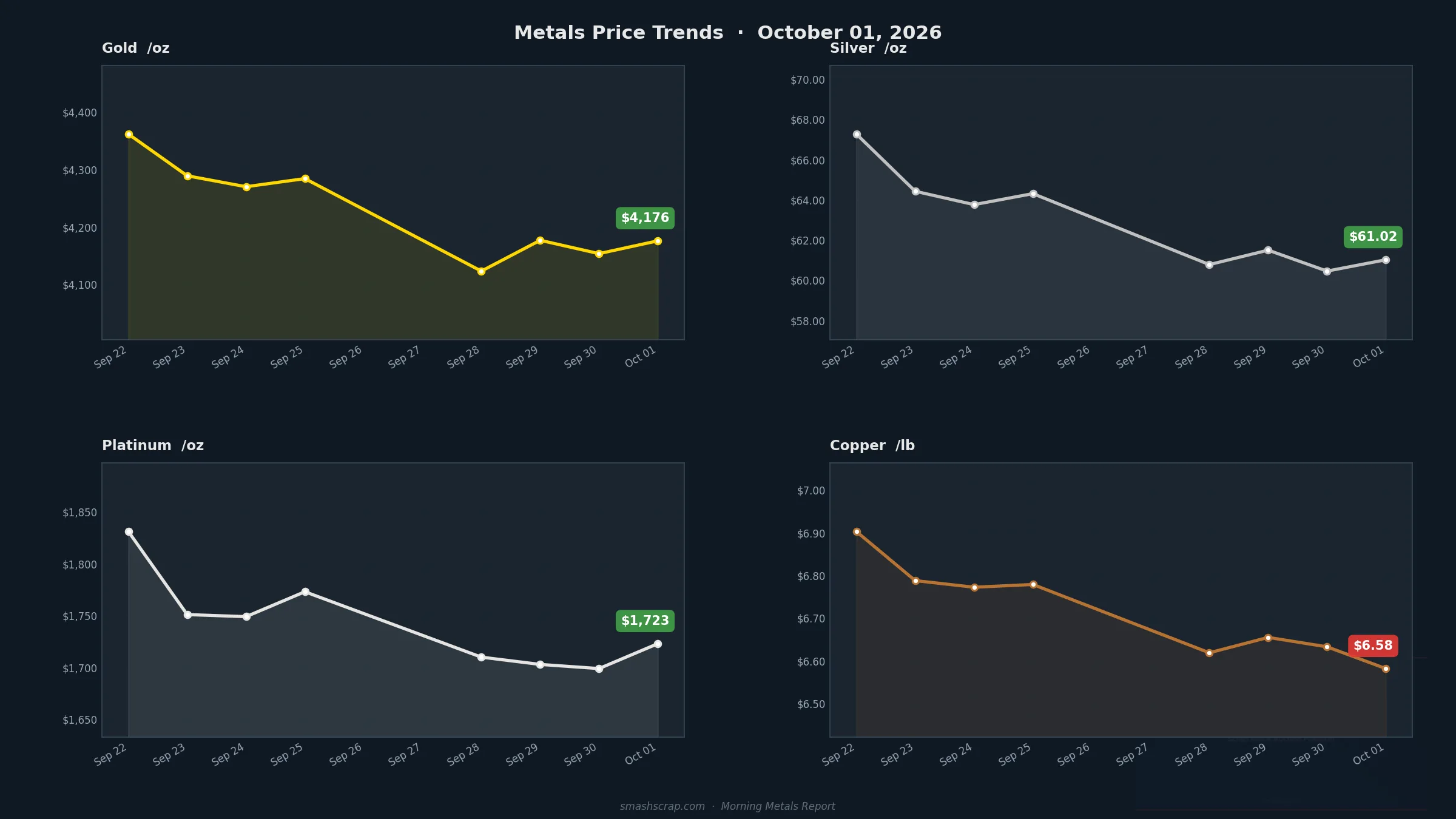
Gold flirting with $4,400/oz. Zinc hitting multi-year highs. A three-hour LME blackout. If you think macro news doesn't move your scrap bids, this week proved otherwise. For industrial scrap metal buyers and sellers across North America — including busy yards in Long Beach and throughout California — the commodity signals out of this week matter. Here's what happened, what it means for your loads, and what to watch heading into next week.
This isn't financial advice. It's a no-fluff breakdown of the week's key moves, translated for people who deal in HMS, copper, cats, and shredded — not derivatives desks. Prices fluctuate constantly; always verify current rates before buying or selling.
---Base Metals: Copper and Zinc Stole the Week
Copper came into the week with a strong tailwind — up roughly 9% since geopolitical tensions escalated around Iran — sitting near January highs. The driver mix was familiar: supply constraints, structural shortages, and ongoing AI infrastructure buildout pulling hard on wire and copper demand. That's real. Data centers, grid upgrades, and EV manufacturing don't slow down because the news cycle gets noisy.
That said, London trading pulled in the opposite direction mid-week, reflecting the usual tug-of-war between macro optimism and demand uncertainty out of China. For yards moving bare bright, #1 copper, or insulated wire, the takeaway is simple: the structural demand story for copper is intact, but short-term price swings are wide. Locking in offers from a single buyer on a day like this is a gamble. Competition across multiple vetted buyers — the way SMASH Scrap — North America's B2B scrap metal auction platform runs it — gives you a cleaner read on what the market will actually pay right now.
Zinc was the headline base metal of the week, full stop. LME zinc hit its highest level in nearly four years. The catalysts were stacking fast:
- Heavy rainfall and flooding disrupted mining and smelting operations in key Chinese producing regions
- Lower output from major global miners tightened refined supply
- Exchange inventories continued to fall, signaling physical tightness rather than just speculative positioning
For scrap yards handling galvanized steel or zinc-bearing non-ferrous material, this is a market worth watching closely. Tighter zinc supply typically supports scrap substitution demand from smelters. If you've got zinc-rich material sitting in inventory, this isn't the week to let it move at a stale price.
---Aluminium Spiked on Regional Supply Disruption
Aluminium got its own jolt this week when QatarEnergy announced a halt in metal output linked to disruptions from the Iran war — specifically affecting its stake in Qatalum, one of the region's significant aluminium production facilities. Regional conflict rippling into primary metal supply is exactly the kind of supply shock that moves scrap premiums, because smelters looking to fill capacity gaps turn to secondary and scrap feed.
For industrial scrap metal buyers running aluminium programs — whether that's turnings, clips, cast, or extrusion — this is a signal worth tracking. It doesn't mean scrap aluminium prices will move dollar-for-dollar with primary, but supply disruption at the primary level historically pushes scrap demand upward. Long Beach port activity, which handles significant aluminium import and export flow in and out of California, adds another layer of relevance for West Coast yards watching this story.
The broader takeaway: aluminium scrap pricing is no longer just about the LME tape. It's about where primary supply is coming from, what's disrupted, and how hungry secondary consumers are to fill the gap. Documenting your aluminium inventory properly — grades, weights, photos — matters more in a volatile week like this. Buyers pay more for certainty. That's a core reason documented, photo-verified listings on platforms like explore the SMASH scrap metal marketplace tend to generate stronger buyer engagement.
---The LME Outage: When Price Discovery Breaks Down
The London Metal Exchange suffered a trading outage this week — nearly three hours, caused by a technical failure in the primary electronic matching engine. The exchange declared a formal Disruption Event before trading resumed on a secondary system. For anyone who had live orders or was trying to lock in a price during that window: you know exactly how frustrating that kind of opacity feels.
It's a good reminder of why price discovery mechanisms matter — and why relying on a single price reference or a single buyer call on any given day is a fragile strategy. When the LME goes dark, the spread between what someone's willing to pay and what you'll accept can widen fast, and not in your favor.
This is exactly the problem that scrap metal auctions online solve at the yard level. You don't have to guess what the market is. You run the auction, vetted buyers compete, and the clearing price tells you what the market actually is — not what one buyer on the phone decides to offer before noon. Read the latest scrap industry news for ongoing coverage of market disruptions and what they mean for North American recyclers.
---Gold Near $4,400 and What It Means for the Scrap Market
Gold touched near $4,400/oz after Consumer Sentiment dropped and one-year inflation expectations ticked up. Wall Street shifted full-bull as rate-hike bets faded following softer retail sales data and inflation numbers that cemented a Fed rate-hold position heading into next week. Silver followed gold's lead mid-week, though both metals saw some turbulence as Iran peace deal hopes dimmed and crude oil pushed higher — Brent near $89.63, WTI near $83.91 at last check.
For scrap yards, the gold and silver story matters most at the refining and PM scrap level — catalytic converters (cats), e-scrap with precious metal content, and circuit board material. When gold and silver run, PM recovery values run with them. West Coast yards in California — including yards serving the Long Beach industrial corridor — often see strong demand from PM buyers when precious metals are elevated. If you're sitting on a cat inventory or a pile of e-scrap, this is not the week to be slow on documentation and listing.
Fed minutes drop next week. Rate expectations are the dominant driver for precious metals right now. If the minutes confirm a rate-hold posture, expect gold to hold strength — which means PM scrap demand holds with it. Watch housing data and PMI releases mid-week for additional direction signals.
---Regulatory and Trade Notes: India's Scrap TCS Rate Change
A notable policy development worth flagging, even for North American yards: India's latest budget included a proposed increase in the Tax Collected at Source (TCS) rate on the sale of scrap — moving from 1% to 2%. India is a major importer of ferrous scrap, and changes to its domestic tax treatment of scrap transactions can influence how aggressively Indian mills bid on export flows from the U.S. and elsewhere.
The same budget raised Securities Transaction Tax (STT) on futures from 0.02% to 0.05%, and on options premiums from 0.10% to 0.15%. That increases the cost of commodity trading in Indian markets — a secondary pressure on Indian steel and scrap market liquidity.
Why does this matter in Long Beach or anywhere on the U.S. coasts? Because ferrous export pricing to Asia is a real factor in what domestic buyers offer for HMS and shredded. When Indian and Southeast Asian mill demand pulls back — whether due to policy friction, higher import costs, or currency moves — domestic U.S. scrap prices feel it. Keep an eye on export offers out of West Coast ports over the next few weeks.
For yards looking to navigate that kind of demand volatility, the answer is the same as always: don't depend on one buyer, one call, or one market. Multiple buyers competing for your load — through a platform like SMASH — is how you avoid getting squeezed when one segment of demand softens. If you're in the U.S. and want to understand how auction-based selling compares to traditional brokered sales, explore scrap car removal services at GetMyScrapCar for another angle on how modern scrap platforms work end-to-end.
---What to Watch the Week of August 18–22, 2026
Next week has a few clear market-moving events stacking up. Here's what matters for North American scrap sellers and buyers:
- Fed Minutes (mid-week): Will confirm or challenge the rate-hold narrative. Precious metals, copper, and aluminium will react. If rate-hold is confirmed, expect PM scrap demand to stay firm.
- U.S. Housing Data: Housing starts and permits feed downstream steel demand signals. Weak housing = softer demand for rebar and structural steel = more pressure on ferrous scrap margins.
- PMI Releases: Manufacturing PMI is the canary for industrial scrap demand. Sub-50 readings = more demand caution from mills. Watch particularly for any West Coast manufacturing signals that affect California yards.
- China Flood Impact on Zinc/Base Metals: Ongoing monitoring of smelting disruptions. If more capacity goes offline, zinc and lead premiums could push further.
- LME System Stability: After this week's outage, watch for any follow-up announcements from the LME on system reliability. Institutional confidence in price discovery infrastructure matters for how mills set their scrap offers.
Disclaimer: Metal and scrap prices fluctuate daily based on market conditions, currency movements, and supply/demand factors. The figures referenced in this post reflect reported market data for the week ending August 16, 2026. Always verify current pricing before making buying or selling decisions.
---Frequently Asked Questions
Q: How do industrial scrap metal buyers use commodity market data to set prices?
Industrial scrap metal buyers track LME and COMEX futures, domestic mill offers, and export demand to build their buying prices. When primary metal prices move sharply — as copper and zinc did this week — scrap buyers adjust their bids to reflect the new cost-of-replacement reality. That's why watching macro market moves matters even if you're running a regional recycling yard in Long Beach or anywhere else in California.
Q: What are scrap metal auction prices today and where do I check them?
Scrap metal auction prices change daily and vary by grade, region, and buyer appetite. There's no single published number — the real price is what vetted buyers will actually pay in a competitive auction setting. Platforms like SMASH run live auctions where multiple buyers bid on your listed loads, giving you a real-time market clearing price rather than a single broker's offer. Always confirm current rates directly through the platform before listing.
Q: Can I sell scrap metal online if I'm in Long Beach, California?
Yes. SMASH connects yards and sellers across North America — including California — with vetted buyers who bid competitively on listed loads. You document your material with photos, weights, and grade information, list it on the platform, and buyers compete in an auction format. No subscription fees — SMASH earns only when a sale clears. It's a straightforward way to sell scrap metal near me without being locked into a single local buyer.
Q: How does geopolitical risk affect scrap metal prices in the U.S.?
Geopolitical disruptions — like the Iran conflict affecting regional aluminium output or China flooding disrupting zinc smelting — reduce primary metal availability, which pushes smelters toward scrap as a substitute feed. This typically supports scrap demand and premiums for relevant grades. U.S. yards near major ports like Long Beach often see this translate directly into export buyer interest for non-ferrous material.
Q: What is SMASH and how does the scrap metal auction work?
SMASH is a B2B auction platform for scrap metal, catalytic converters, and industrial recyclables serving buyers and sellers across North America. Sellers list loads with photos, weights, and documentation. Vetted buyers compete in an online auction format. The competitive bidding process supports better price discovery than a single phone call to one buyer. There are no subscription fees — SMASH only wins when the seller wins. Register free at smashscrap.com.
---Stop leaving money on the table with one-buyer calls. List your scrap loads on SMASH and let vetted buyers compete for your material. Register for free at smashscrap.com — or reach out directly to jeff@smashscrap.com to get started selling or buying today.
Follow SMASH on LinkedIn for weekly scrap market updates, industry news, and insights you can actually use on the yard floor.