Joliet Online Scrap Metal Sales: Tariff Impact Guide
Week Ending August 30, 2026 — Scrap Metal Market Recap
It was a rough week to be holding paper bets on gold. Between Jackson Hole fallout, a U.S.-Canada tariff escalation, and an LME platform outage, the commodity complex didn't give traders a dull moment. For scrap yards and recyclers watching online scrap metal sales conditions, there's plenty to unpack before Monday morning. Here's what moved markets, what got headlines, and what you need to watch heading into September.
Disclaimer: Scrap metal prices fluctuate daily based on market conditions, regional demand, and commodity index movements. Always verify current rates before listing or selling material. Nothing here constitutes financial advice.
---1. U.S.-Canada Tariff War Rattles Metals Sentiment
The biggest macro story of the week hit close to home for North American scrap operators. The U.S. imposed 50% tariffs on roughly $20 billion of Canadian imports, and Canada fired back with $20 billion in retaliatory tariffs across more than 700 U.S. goods. Metals and materials stocks briefly caught a bid on the news — the kind of knee-jerk reaction you see when traders assume domestic supply gets tighter — but the rally didn't hold. By Friday close, XLB finished negative and SLX was barely flat.
For ferrous scrap, this matters. Cross-border scrap flows between the U.S. and Canada are significant, particularly for integrated mills and EAF operators sourcing obsolete material across state and provincial lines. Yards in the Midwest — including operators around Joliet, Illinois — that move bulk material to Canadian-linked processors or buyers should be paying close attention. If trade friction tightens flows, domestic competition for prime obsolete grades could shift. That's not a guarantee of higher prices, but it changes the competitive picture for buyers and sellers alike.
What it means for scrap sellers: More uncertainty in the bid stack. When macro conditions are noisy, having multiple buyers competing for your load matters more than ever. That's exactly where SMASH Scrap — North America's B2B scrap metal auction platform earns its keep — instead of calling one buyer and hoping the number is fair, you let the market tell you what your load is worth.
2. Copper Stays Strong — Non-Ferrous Still a Bright Spot for Scrap Metal Prices Today
While ferrous sentiment got muddied by tariff noise, copper kept its footing. The red metal is reportedly up approximately 9% since the onset of Iran-related geopolitical tensions earlier this year, trading near January highs. The drivers are structural: AI data center buildout is consuming wire and busbar at scale, supply pipelines out of South America remain constrained, and geopolitical risk premia aren't going away anytime soon.
Aluminum also caught a lift this week. QatarEnergy halted metal output tied to its stake in the Qatalum smelter operation, tightening regional supply expectations and nudging LME aluminum higher. Neither of these moves translates one-for-one into scrap yard buying prices — mill spreads, freight costs, and local demand all play in — but the direction of travel matters. Strong primary copper and aluminum markets tend to pull scrap grades upward with them, though with a lag.
For yards sorting and holding non-ferrous material — bare bright, #1 copper, zorba, painted aluminum — the current copper strength is worth watching before you move inventory at a stale price. And if you're asking yourself how much is scrap metal bringing per pound in your region right now, the honest answer is: enough that you shouldn't be letting one buyer set your number unchallenged.
- Copper: Supported by geopolitical tension, AI demand, and supply constraints — trending near recent highs
- Aluminum: QatarEnergy smelter disruption tightened supply; LME prices moved higher on the news
- Non-ferrous scrap: Mill buying appetite remains firm; document your grades well to support strong bids
3. Steel Scrap Market Analysis — Cost Pressure Building From the Input Side
The steel scrap market analysis picture this week is one of margin compression rather than demand collapse. Higher coking coal prices — driven by supply disruptions in both Australia and China — are pushing steelmaking input costs up at integrated mills. That's raising production costs and, in some cases, prompting a rethink of mill expansion timelines. For EAF operators, scrap remains competitively positioned against pig iron, but cost tailwinds from cheap energy and stable prime grades are becoming less reliable.
In the U.S. domestic market, the tariff situation adds another variable. If Canadian prime grades become harder to source or more expensive to move across the border, domestic prime obsolete and busheling prices could see upward pressure — particularly in the Great Lakes region where cross-border mill supply chains are tightest. Joliet and the broader northern Illinois corridor sit squarely in that zone. Yards that sell scrap metal in bulk in Joliet and ship to regional EAFs should be watching how mill procurement teams respond over the next few weeks.
The LME Select platform outage earlier this period — nearly three hours of electronic trading disruption before a secondary engine came online — is a reminder of how interconnected global base metal pricing has become with scrap buying spreads. When price discovery gets disrupted, even briefly, it creates spread uncertainty that ripples through to yard-level bids.
Bottom line: Steel markets aren't falling apart, but they're not clean right now. Input costs are elevated, trade policy is adding noise, and mill buyers are cautious. That's a market where documented inventory, competitive bidding, and clear BOLs and packing lists separate sellers who get good outcomes from those who don't. You can read the latest scrap industry news for ongoing coverage of how these dynamics are playing out across North American markets.
4. Gold Takes a Hard Hit — What Jackson Hole Means for Scrap Operators
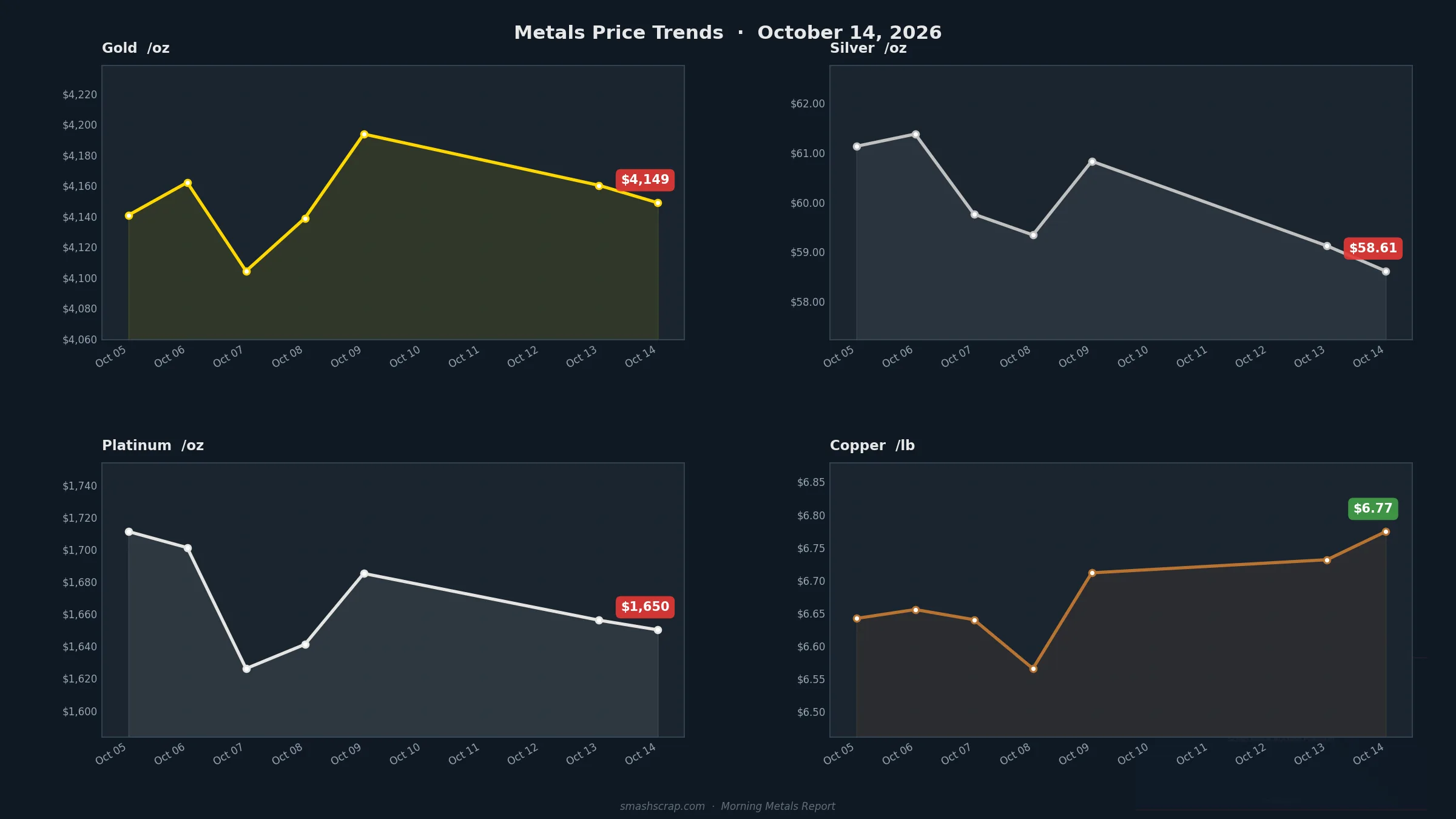
Gold dropped sharply this week after Fed Chair Warsh's comments at Jackson Hole signaled the Fed still has "work to do" on inflation. Comex gold for December delivery fell roughly $150, or about 3.2%, to $4,680 per ounce — a brutal single-week reversal after a seven-session rally. Silver followed, dropping over 3.6% to around $67.78 per ounce on Comex. Wall Street analysts are holding out hope that Friday's payroll data restores some bullish momentum, but the near-term direction is uncertain.
For scrap operators, precious metals in the form of catalytic converters, e-scrap, and PGM-bearing industrial material are directly affected by this kind of volatility. Cats in particular — already subject to intense scrutiny around documentation and serial tracking — have their floor prices tied to platinum group metal spot. A sustained drop in precious metals drags cat values with it. If you're holding a batch of cats waiting on price, a week like this one is an argument for moving material through a competitive auction rather than sitting on it and hoping for a recovery.
The broader macro takeaway: higher-for-longer rates are not a scrap-friendly macro environment. They dampen construction activity, slow automotive production, and tighten the credit conditions that drive industrial recycling volumes. None of that is new — but the Jackson Hole comments suggest the Fed isn't pivoting anytime soon. Plan your inventory and sales cadence accordingly.
What to Watch Next Week (September 1–7, 2026)
Heading into the first full week of September, here's where scrap operators should focus their attention:
- U.S. Payroll Data (Friday, September 4) — The jobs number will shape rate expectations and move both base metals and precious metals. A strong print could push gold lower and pressure copper; a weak print could reverse some of this week's losses. Watch for volatility at open Monday.
- U.S.-Canada Tariff Escalation — Will either side blink? Any signs of negotiation or escalation will directly affect cross-border scrap flows and domestic mill procurement. Pay attention to mill announcements on prime grade purchasing.
- Copper Demand Signals — With copper sitting near January highs, any demand-side wobble from the AI/data center buildout narrative or a broader equity selloff could create a sharp correction. Non-ferrous yards holding inventory should watch daily LME settlements closely.
- Steel Mill Buying Spreads — Post-Labor Day is traditionally a period of firmer scrap demand as mills replenish after summer. Watch for mill buy announcements in the Midwest and whether the tariff uncertainty delays normal Q3 restocking patterns.
- PGM and Cat Prices — With gold and silver having just taken a hit, platinum and palladium face directional risk heading into next week. Cat sellers should get competitive bids now rather than waiting for a bounce that may or may not come.
If you're running scrap operations in Illinois or the broader Midwest, platforms like explore the SMASH scrap metal marketplace give you a way to put your loads in front of vetted buyers without guessing which direction the market is heading. Competition does the work. You get the data. No subscription fees.
And if you're managing end-of-life vehicles alongside your metal inventory, explore scrap car removal services at GetMyScrapCar for a straightforward way to handle the vehicle side of the equation.
---Frequently Asked Questions
Q: How do U.S.-Canada tariffs affect scrap metal prices in Joliet, Illinois?
Tariffs on cross-border goods can disrupt scrap flows between the U.S. and Canada, affecting how much prime ferrous and non-ferrous material is available to mills in the Great Lakes region. Yards in Joliet and northern Illinois that supply regional EAF mills may see changes in mill buying behavior and bid spreads if cross-border supply tightens. More domestic competition for prime grades can push prices higher — or create uncertainty that makes buyers more cautious.
Q: What are scrap metal prices today for copper and steel in Illinois?
Scrap metal prices fluctuate daily based on LME benchmarks, regional mill demand, freight costs, and local yard competition. As of late August 2026, copper grades have been supported by strong primary prices, while steel scrap faces some cost pressure from higher coking coal inputs. Always check current rates with regional buyers or through a competitive auction platform. Prices mentioned in this recap are for market context only — verify current rates before selling.
Q: How much is scrap metal bringing per pound right now?
Per-pound rates vary significantly by metal type, grade, and region. Copper bare bright, #1 copper, and aluminum grades have been firmer in recent weeks, while ferrous grades face some macro uncertainty. The best way to know what your specific load is worth is to put it in front of multiple buyers at once — which is exactly how SMASH's auction format works.
Q: Is online scrap metal sales a reliable way to sell bulk loads in Joliet?
Yes — for B2B bulk loads, online auction platforms let you reach vetted buyers across North America rather than relying on a single local bid. This is especially valuable during volatile weeks like this one, when a single buyer's spread may not reflect actual market demand. SMASH handles inventory documentation, VIN lookup for cores and vehicles, photo documentation, and auto-invoicing — all designed to give buyers enough confidence to bid competitively on your material.
Q: What should scrap yards do when commodity markets are this volatile?
Document everything, move material competitively rather than speculatively, and avoid holding inventory waiting on a price recovery that may not come on your timeline. A well-documented load with clear grade photos, accurate weights, and proper packing lists gives buyers confidence to bid higher. Running it through a competitive auction format rather than a single-buyer call gives you price discovery — not a guess.
---List your scrap on SMASH today — register for free at smashscrap.com. No subscription fees. We only win when you win.
Follow SMASH on LinkedIn for weekly scrap market updates, industry news, and platform announcements: SMASH on LinkedIn.