Mesa Scrap Yard Discovers Hidden Pricing Gaps
One Arizona Yard Was Leaving Money on the Table. Here's How They Fixed It.
Most scrap yards don't know they have a pricing problem. They think they do — they call their buyer, get a number, load the truck, and move on. But scrap metal industry trends in 2026 are exposing a hard truth: single-buyer relationships quietly erode margin over time, and most operators don't notice until someone shows them a better number.
This is the story of a mid-size recycling operation based in Mesa, Arizona. We've kept the name anonymous at their request. But the details are real, the process was real, and what they learned is worth every operator reading.
The Situation: Comfortable, But Quietly Losing Ground
The yard had been running the same playbook for years. A solid operation — non-ferrous, catalytic converters, some industrial scrap from local demolition and manufacturing accounts. Located east of Phoenix, Mesa is a dense industrial corridor. There's no shortage of material moving through the region.
Their process was simple: one primary buyer for cats, another for non-ferrous, occasional spot loads to a third contact when the pile got big enough. Phone calls, a handshake price, and a packing list sent by email. It worked. Or so they thought.
"We weren't unhappy," the yard manager told us. "We just assumed we were getting a fair price. We'd been with the same buyers for a long time. You build a relationship and you trust it."
That trust was about to get stress-tested.
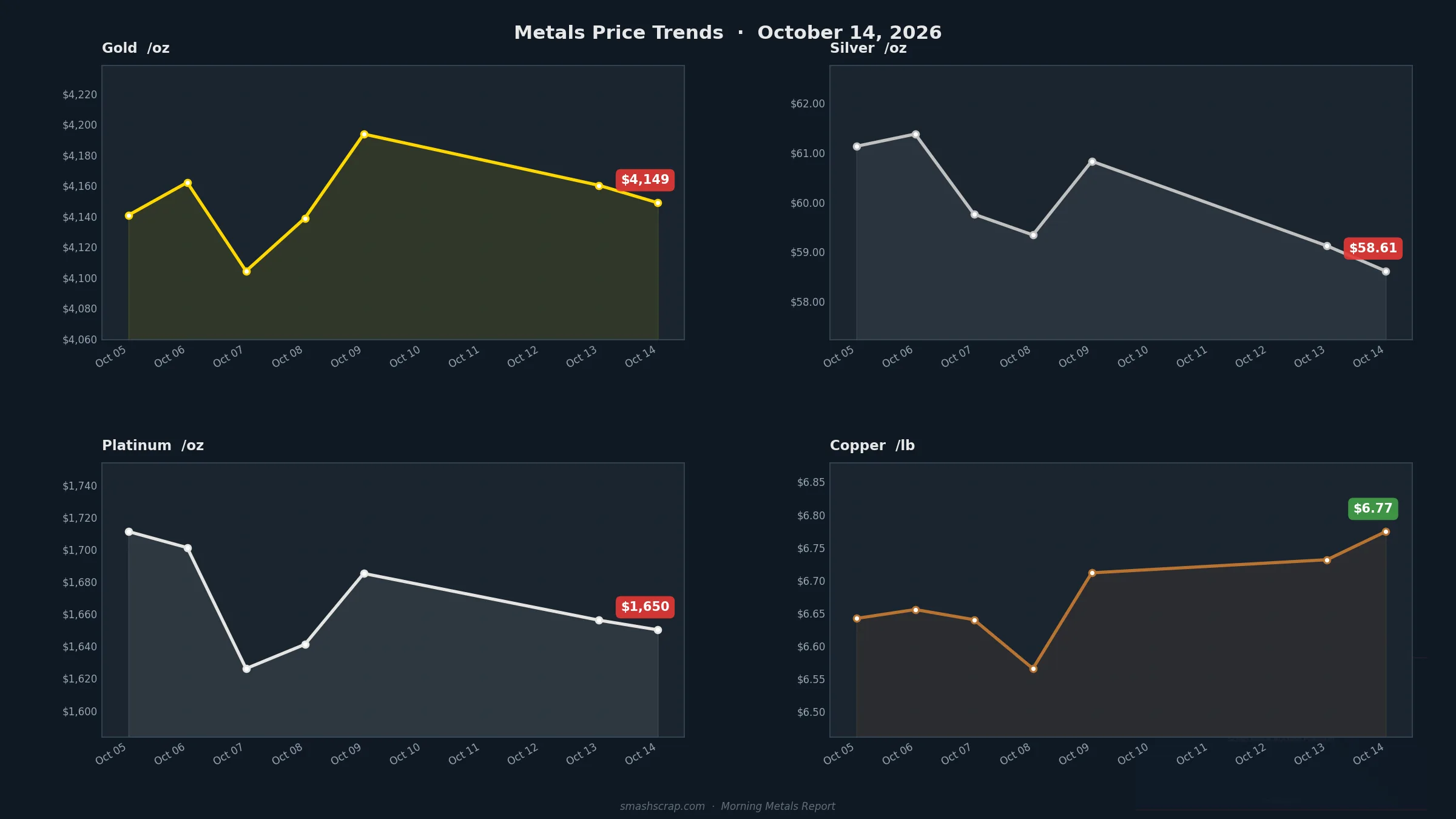
In mid-2026, steel prices had been recovering after a rough June-July stretch — long steel up roughly 12% over a single month, with industrial demand tightening supply across the board. The non-ferrous market was moving too. Their buyer's numbers, however, barely moved. The yard was sitting on a growing inventory of catalytic converters and a significant tonnage of clean copper and aluminum. They were watching commodity reports and wondering why their offers weren't tracking.
A contact in the industry pointed them toward SMASH Scrap — North America's B2B scrap metal auction platform. They were skeptical. "I figured it was another middleman," the manager said. "I didn't want someone taking a cut and delivering me the same buyer I already had."
The Process: Listing, Documentation, and the First Auction
They started with a test load — a mixed lot of catalytic converters they'd been sitting on, plus a partial load of bare bright copper. Nothing huge. Enough to see how the platform worked without betting the whole operation on it.
The inventory tool inside SMASH made the documentation process faster than they expected. They used the VIN lookup and serial tracking features for the cats, uploaded photo documentation load by load, and built out the packing list directly in the platform. No back-and-forth emails. No "send me another photo of that one." Everything was visible to buyers before the auction opened.
"That part surprised me," the manager said. "Usually I'm on the phone explaining what I've got. Here, I just showed them. The photos, the serials, the weights — it was all there. Buyers could see exactly what they were bidding on."
That documentation quality matters more than most sellers realize. Vetted buyers on a B2B scrap metal marketplace are making decisions fast. Complete, accurate inventory means they can bid with confidence — and confident buyers bid higher.
The auction ran. Multiple buyers participated. The yard manager watched the bids come in, which was a new experience in itself. "With my regular buyer, I got one number. Take it or leave it. Watching actual competition happen in real time — that was different."
The copper load closed above what their regular contact had quoted. The catalytic converter lot also outperformed their expectation, which they attributed to the quality of the documentation and the competitive format. Auto-invoicing handled the paperwork on the back end. No chasing. No confusion.
The Outcome: What Actually Changed
After the first auction, they didn't abandon their existing relationships. They used SMASH to pressure-test them. That's a smart move — and an increasingly common one as scrap metal industry trends push more operators toward data-driven price discovery rather than relationship-driven assumptions.
"Now I know what the market is actually willing to pay," the manager said. "If my regular buyer is close, I might still go with them for convenience. But now I know. That knowledge is worth something on its own."
Over the following months, they shifted their catalytic converter volume almost entirely to SMASH. The ability to sell catalytic converters online to a pool of vetted buyers — with full serial documentation and photo records — gave them both better price discovery and a cleaner paper trail. That documentation also started paying dividends in other ways: cleaner BOLs, less dispute risk, faster payment cycles.
They also started using SMASH for occasional industrial scrap tender situations — larger mixed lots from demo accounts that didn't fit neatly into their regular buyer's appetite. Instead of trying to split the load and negotiate separately, they listed it as a single lot, let competition sort it out, and moved on.
Arizona's manufacturing base is growing. Solar, semiconductor, data center infrastructure — all of it generates scrap streams. The yard is positioned to handle more of it. They needed a commercial process that could scale with that volume. A single buyer and a handshake couldn't do that anymore.
If you're in a similar position, you can explore the SMASH scrap metal marketplace to see how the auction format works before you commit a single load.
What B2B Scrap Metal Arizona Sellers Can Learn From This
This yard's story isn't unusual. It's actually the default state for most mid-size operations across the country. Comfortable relationships, no real price benchmarking, and a slow drift away from true market value. The problem compounds quietly.
Here's what this Mesa yard's experience actually teaches:
- One buyer is not a market. It's a single data point. You need competition to find the real number.
- Documentation drives bids. Buyers on a vetted platform bid more confidently when the inventory is clean, photographed, serialized, and properly listed. Incomplete listings get discount bids.
- You don't have to burn your relationships. Use the auction format to benchmark. If your existing buyer is competitive, great. If they're not, now you know.
- The cats line deserves extra attention. Catalytic converter pricing is notoriously opaque. PGM values fluctuate, and without competing buyers, you're at a serious information disadvantage. Serial tracking and vetted buyer pools exist specifically to solve this.
- Subscription fees are a red flag. SMASH doesn't charge subscription fees. You pay when you sell. That alignment matters — we only win when you win.
For yards handling volume across the B2B scrap metal Arizona corridor — from Mesa to Phoenix to Tucson — the market is moving fast enough in 2026 that guessing your price is no longer a viable strategy. Steel is recovering. Non-ferrous is volatile. PGM values in cats are always shifting. You need real-time competition, not a phone call to someone who already knows you'll take what they offer.
For scrap cars specifically — a common source of non-ferrous, cores, and catalytic converters — schedule a free scrap car pickup to start moving vehicle-sourced material the right way.
The Market Context in Late August 2026
It's worth noting what's happening in the broader market right now, because it shapes what a good auction outcome looks like. Long steel prices have rebounded sharply over the past month, with infrastructure demand absorbing supply faster than mills expected. That creates a favorable environment for ferrous sellers who have quality material documented and ready to move.
On the non-ferrous side, silver demand from solar manufacturing is actually easing in 2026 — panel makers have been engineering silver out of cells to cut costs — which has some downstream effect on recycling streams tied to end-of-life solar modules. If you're handling solar panel scrap or e-scrap with silver content, watch that market closely.
Copper remains a strong performer. Arizona's expanding semiconductor and data center footprint keeps industrial copper demand elevated, which makes clean non-ferrous lots in this region particularly competitive when listed properly.
None of this guarantees a specific outcome on any given load. Markets move. Bids reflect the moment. But understanding the current environment — and presenting your material to as many qualified buyers as possible — is the only rational response to volatility. To stay current on what's affecting scrap markets week to week, read the latest scrap industry news on the SMASH blog.
The Mesa yard figured that out. You can too.
Frequently Asked Questions
Q: What are the biggest scrap metal industry trends affecting U.S. yards in 2026?
The most significant trends in 2026 include recovering steel prices after a mid-year slump, continued volatility in PGM values affecting catalytic converter pricing, and a growing shift toward digital B2B auction platforms for price discovery. More operators are moving away from single-buyer relationships toward competitive formats that expose true market value.
Q: Is SMASH a good option for selling catalytic converters online in Arizona?
Yes. SMASH's platform includes serial tracking, VIN lookup, and photo documentation specifically designed for catalytic converter lots. These features give vetted buyers the confidence to bid competitively. For yards in Mesa and across Arizona, this means better price discovery on one of the most value-dense — and price-opaque — materials in the yard.
Q: How does a B2B scrap metal marketplace differ from selling to a single buyer?
A single buyer gives you one number with no reference point. A B2B marketplace creates competition among vetted buyers, which helps reveal what the market is actually willing to pay. More competition typically means better price discovery — and a documented record of every transaction.
Q: Does SMASH charge subscription fees for scrap yards?
No. SMASH does not charge subscription fees. You only pay when you sell. That means no upfront cost to list your material and no monthly commitment — the platform is aligned with your success, not your sign-up.
Q: How do I get started selling scrap metal through SMASH in Mesa or elsewhere in Arizona?
Registration is free at smashscrap.com. Once registered, you can start building inventory listings using the platform's documentation tools, including photo uploads, packing list creation, and serial tracking for cats. For direct assistance, email jeff@smashscrap.com — that's the fastest route if you're ready to list or buy.
List your scrap on SMASH today — register for free at smashscrap.com.
Scrap metal prices fluctuate based on market conditions, material grade, and buyer demand. Always verify current rates before making selling decisions.
Follow SMASH on LinkedIn for weekly scrap market insights, industry trend coverage, and platform updates.