
LA Recycling Yard Doubles Profit Using Market Analysis
Most yard operators in Los Angeles don't lose money because they're bad at the job. They lose money because they're flying blind. One load of copper scrap, one buyer, one phone call — and whatever price that buyer quotes is the price you take. That's not a market. That's a guess. This is the story of how one mid-size Southern California yard figured that out the hard way, and what they did about it.
The Situation: A Profitable Yard Running on Outdated Instincts
Marco runs a family-owned recycling operation out of the San Fernando Valley, about 25 miles north of downtown Los Angeles. He inherited the yard from his father in 2019 and spent the next few years learning the business the same way his dad did — relationships, handshake deals, and a rotating cast of three or four regular buyers who called when they had interest.
By mid-2025, the yard was moving decent volume. A mix of ferrous and non-ferrous: shredded steel, copper wire, #1 bare bright, insulated wire, some catalytic converter cores coming in from a few local auto shops. Business wasn't bad. But Marco had a nagging feeling he couldn't shake.
"I never actually knew if I was getting a fair price," he said. "My guy would call, give me a number, I'd compare it against whatever index I had pulled up that morning — and half the time those numbers didn't even match the grade I was selling. I was guessing. I just didn't know it."
He also had a documentation problem. His inventory tracking was a spreadsheet that hadn't been updated consistently in months. When buyers asked for packing lists or photo documentation, it took him half a day to pull it together. More than once, a deal fell apart because the buyer couldn't verify what they were buying before it shipped.
The Problem with Single-Buyer Scrap Deals — And What Scrap Metal Market Analysis Actually Reveals
Marco's situation isn't unusual. It's the default operating mode for hundreds of yards across California and the broader Southwest. You build relationships with a few buyers, those buyers learn your patterns, and over time — even without any bad intent — the pricing starts to drift in their favor. That's just how markets work when there's no competition.
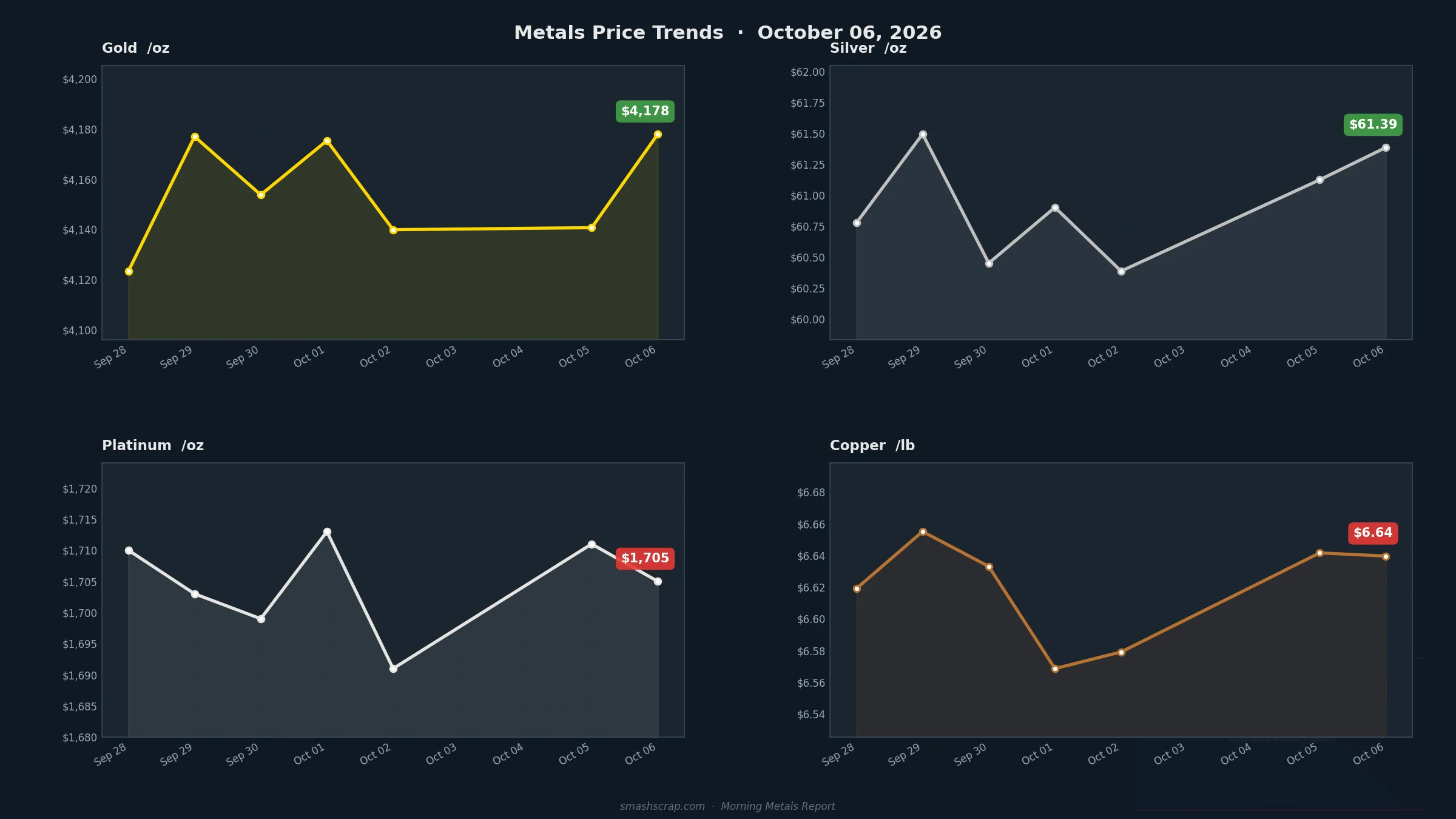
The problem gets worse when you factor in non-ferrous volatility. Copper prices have been moving sharply through 2026 — LME copper recently hit its highest levels in over six months, driven by tightening warehouse inventories. A yard operator selling copper wire on a fixed relationship price in that environment is almost certainly leaving USD on the table.
Proper scrap metal market analysis isn't about watching a ticker. It's about understanding that the price you receive is determined by how many buyers are competing for your material — not by what one buyer feels like paying that morning. Without competition, you don't have a price. You have a quote.
Marco understood this in theory. What he didn't have was a system that made competition possible at his scale, without him having to cold-call brokers across California or post on industry forums and hope someone responded.
Finding SMASH: What a Scrap Metal Auction Platform Actually Changes
Marco heard about SMASH through another yard operator at a Southern California recycling association meeting in early 2026. The pitch was simple: list your material, vetted buyers compete, you see real bids, you choose.
"I was skeptical. I've seen platforms come and go. But this one felt different because there was no subscription. I wasn't paying to maybe get a better price. They only made money if I did."
He signed up and listed his first load through SMASH Scrap — North America's B2B scrap metal auction platform in February 2026. The load was a mix of #1 copper tubing and insulated wire — grades he'd been selling to the same buyer for almost two years.
The listing process forced him to do something he'd been avoiding: document the load properly. He used SMASH's inventory tool to photograph the material, record weights by grade, and build a complete packing list. It took about 45 minutes. He used the serial tracking feature on a batch of stripped transformer cores that were part of the same consignment.
"That documentation piece alone changed how buyers treated me. They could see exactly what they were bidding on. No surprises at the dock."
The Auction Process: What He Saw That He'd Never Seen Before
Once the listing went live, Marco watched something he'd never experienced in seven years of selling scrap: multiple buyers competing for his material in real time.
Not two buyers. Not a bidding war between his regular guy and one other contact. Multiple vetted buyers from across the scrap metal auction California region and beyond, submitting legitimate offers with documentation requirements they'd already agreed to.
"I sat there watching it. I kept thinking — this is what the market actually looks like. I'd never seen it before. I just always assumed my buyer was giving me the market rate because he said he was."
He doesn't disclose the exact spread between his old price and what the auction produced. But he was clear about the broader lesson: "It wasn't just the one load. It was realizing that I'd been selling the same grades to the same guy for two years without ever knowing if I was competitive. That's a problem."
Auto-invoicing through SMASH also cut his back-office time significantly. The BOL was generated through the platform. The buyer had already confirmed specs before the auction closed. The deal moved faster than anything he'd processed through a traditional phone-call arrangement.
What He Learned: Using Data Instead of Gut Instinct
Marco's biggest takeaway wasn't the result of any single auction. It was the shift in how he approached pricing and inventory management going forward.
He now runs scrap metal market analysis as a regular part of his operation — not just by checking price indices, but by treating each significant load as a market event. He lists non-ferrous material through SMASH when volume justifies it. He uses the photo documentation and packing list process for every load, even when he's selling outside the platform, because buyers now expect it.
He's also changed how he thinks about his catalytic converter cores. His shop feeds him a steady stream of cats. He used to sort them loosely and sell in bulk. Now he uses VIN lookup and serial tracking to properly categorize grades before listing — which gives buyers more confidence and drives better price discovery.
"The platform taught me that buyers pay more when they know exactly what they're getting. That sounds obvious. But when you've been doing this the old way for years, it doesn't feel obvious. It feels like trust. And trust isn't a pricing strategy."
For yards operating in or around Los Angeles, the lesson is especially relevant. Southern California is not a thin market. There are active buyers and processors across the region, and demand for clean non-ferrous material — particularly copper and aluminum grades — remains strong heading into Q4 2026. If you're not creating competition for your material, you're not accessing that demand. You're just talking to one person who already knows your habits.
If you want to read the latest scrap industry news and stay current on what's moving and why, knowledge is part of the edge.
The Bottom Line: What a Different Process Looks Like
Marco's story isn't about a dramatic windfall. It's about a yard operator who realized his process was costing him money he didn't know he was losing — and fixed it.
He still works with some of his original buyers. Relationships matter in this industry. But now those relationships exist inside a competitive context. His buyers know he has options. That alone changes how conversations go.
"I'm not trying to squeeze anyone. But I'm also not going to keep selling blind. I've got a business to run."
If you're hauling scrap cars out of the Los Angeles area and want a faster, cleaner process on the vehicle side, you can also schedule a free scrap car pickup to move metal without the paperwork headache.
The old way — one buyer, one call, one guess — works until it doesn't. Explore the SMASH scrap metal marketplace and find out what your material is actually worth when buyers compete for it.
---Frequently Asked Questions
Q: How does scrap metal market analysis help yard operators get better prices?
Scrap metal market analysis helps you understand whether the price you're being offered reflects actual market demand — or just one buyer's margin. When you combine price index data with competitive bidding through an auction platform, you replace guessing with real price discovery. Competition between buyers is the most reliable signal of what your material is actually worth.
Q: Is online scrap metal sales through an auction platform worth it for smaller loads?
It depends on the grade and volume. Non-ferrous materials — copper, aluminum, cats, and cores — tend to benefit most from competitive bidding because pricing is more volatile and grade differentiation matters. Proper documentation through an auction platform also makes smaller loads easier to sell cleanly, since buyers have full transparency on what they're bidding on before the auction closes.
Q: How competitive is the scrap metal auction California market right now?
Southern California has strong buyer activity, particularly for clean copper and non-ferrous grades. LME copper has been moving sharply in 2026 on tight inventory conditions, which increases buyer urgency for well-documented material. Running your loads through a competitive auction format — rather than a single-buyer arrangement — gives you exposure to that demand across the full California market and beyond.
Q: Does SMASH charge a subscription fee to list scrap metal?
No. SMASH operates on a no-subscription model. You don't pay to list material or access buyers. The platform only makes money when a transaction completes — which means the incentive structure is aligned with sellers getting results, not just getting registered.
Q: What documentation does SMASH require when listing a load for auction?
SMASH's inventory tool supports photo documentation, weight and grade recording, packing lists, VIN lookup for vehicle-related material, and serial tracking for cores and components. Better documentation consistently produces better buyer confidence — and buyer confidence drives stronger bids. It's one of the clearest differences between the old phone-call model and a properly structured online scrap metal auction.
---Ready to stop guessing and start competing? List your scrap on SMASH today — register for free at smashscrap.com.
Follow SMASH on LinkedIn for ongoing scrap metal market analysis, industry news, and updates on what's moving in North American recycling markets.