Prepare Industrial Scrap Metal for Sale in St. Paul
Most yards leave money on the table before the load ever leaves the gate. Not because the metal isn't there — but because it's not prepared, documented, or positioned to attract serious industrial scrap metal buyers. If you're running a recycling operation in St. Paul or anywhere across the upper Midwest, what you do before the sale matters as much as the sale itself. This guide walks you through exactly how to prepare industrial scrap for market — and how to make sure buyers are competing for it, not dictating to you.
Market conditions in mid-2026 make this especially relevant. Steel Dynamics just reported record Q2 shipments of 3.7 million tons, with average steel selling prices climbing $105 per ton sequentially to $1,298 per ton — while average ferrous scrap input costs only rose $16 to $412 per ton. Mills are making money. Demand is firm. That means leverage exists for sellers who show up prepared.
---Why Preparation Is the Difference Between a Quote and a Bid War
Here's the old way: you call one buyer, they come out, they eyeball the pile, and they throw you a number. You take it or leave it — but you almost always take it, because what else are you going to do? That model works great for buyers. It doesn't work for you.
The SMASH way is different. When industrial scrap metal buyers bid on a documented, graded, photographed load through SMASH Scrap — North America's B2B scrap metal auction platform, they're competing. Competition drives price discovery. But buyers can only compete confidently when they know exactly what they're bidding on. Preparation is what unlocks that competition.
A load described as "mixed non-ferrous, assorted" gets low bids and low confidence. A load listed as "700 lbs #1 bare bright copper, segregated, photographed, with packing list" gets real interest from vetted buyers who know what they're getting. The metal is identical. The outcome isn't.
---Step 1: Sort and Segregate by Grade Before Anything Else
Mixing grades is the fastest way to lose value. Buyers price to the lowest common denominator in a mixed load. Every pound of contamination drags down the price per pound of clean material. Sort first, sell later — always.
For ferrous scrap, separate your loads into distinct categories:
- #1 Heavy Melting Steel (HMS 1): Clean, uncoated steel, minimum 1/4 inch thick. No galvanized, no tin, no sealed containers.
- #2 HMS: Thinner gauge steel, may include some light iron. Still segregated from shred feed.
- Busheling / #1 Busheling: Clean steel punchings and clippings, highly valued by electric arc furnace mills. Upper Midwest buyers pay close attention to this grade given proximity to flat-rolled production.
- Shredder feed / auto bodies: Keep separate. Commingling auto shred with cleaner industrial grades destroys value.
For non-ferrous, the stakes are even higher. Copper grades span bare bright, #1 copper, #2 copper, and insulated wire — and the price gap between bare bright and #2 can be significant per pound. Don't let them blur together in a bin. Aluminum grades (6061 extrusion, cast, clip, auto cast) are equally distinct. Separate them physically on the floor before you touch a scale or a camera.
---Step 2: Weigh Accurately and Document Every Load
Guessing weight kills credibility. Wholesale scrap metal buyers who are bidding blind on a load they haven't seen in person need accurate weights to make confident offers. Inaccurate weights — even when unintentional — erode trust and suppress bids.
Use a certified scale. Log gross, tare, and net weights for each grade separately. If you're running multiple containers or gaylords of non-ferrous, weigh each one and label it. When buyers can verify your weights match your documentation, they bid with more confidence. When they can't, they discount for uncertainty.
Build a simple packing list for every load that includes:
- Material description and grade designation
- Net weight per line item
- Estimated piece count where relevant (cores, cats, units)
- Condition notes (clean, light contamination, mixed gauge, etc.)
- Location of material (yard address, dock availability)
This packing list becomes your Bill of Lading foundation. It also becomes your listing document when you post on SMASH. Doing it once, doing it right, serves every step downstream.
---Step 3: Photo Documentation — Shoot It Like a Buyer Will Scrutinize It
Documented inventory gives buyers more confidence. That's not a marketing line — it's how auctions work. A buyer placing a bid on a load they've never physically touched is relying on your photos and your documentation. Make both count.
Shoot every load before it moves. Use these principles:
- Natural or strong artificial light. Dark, blurry photos communicate that you're hiding something — even when you're not.
- Multiple angles. Wide shot of the full load, mid-distance showing material character, close-up showing grade quality and condition.
- Scale reference in frame. A ruler, a tape measure, or a familiar object helps buyers gauge piece size for metals like copper tubing, rod, or plate.
- Show the sort. If the load is clean and segregated, prove it. A photo of neatly sorted #1 bare bright copper in a gaylord communicates quality before a single word is read.
- Don't hide contamination. If there's light contamination, show it and note it. Buyers who discover surprises at pickup don't come back — and they don't bid on your next load either.
For catalytic converters and cores, serial tracking and photo documentation aren't optional — they're how vetted buyers verify value before bidding. Each cat should be photographed, and if you're using SMASH's VIN lookup and serial tracking tools, that data ties directly to the listing. That's transparency that moves pricing in your favor.
---Step 4: Understand the Market Before You List
You don't need to be a commodity trader. But you should know whether the market is moving before you commit a load to auction. Read the latest scrap industry news to track where ferrous and non-ferrous prices are heading — especially heading into Q3 2026, where upper Midwest mill demand looks firm based on current production data.
A few factors St. Paul-area yards should watch right now:
- Ferrous scrap input costs at mills are climbing modestly ($16/ton increase in Q2 at major electric arc producers), while finished steel prices have jumped significantly. That spread typically supports continued mill demand for quality ferrous grades.
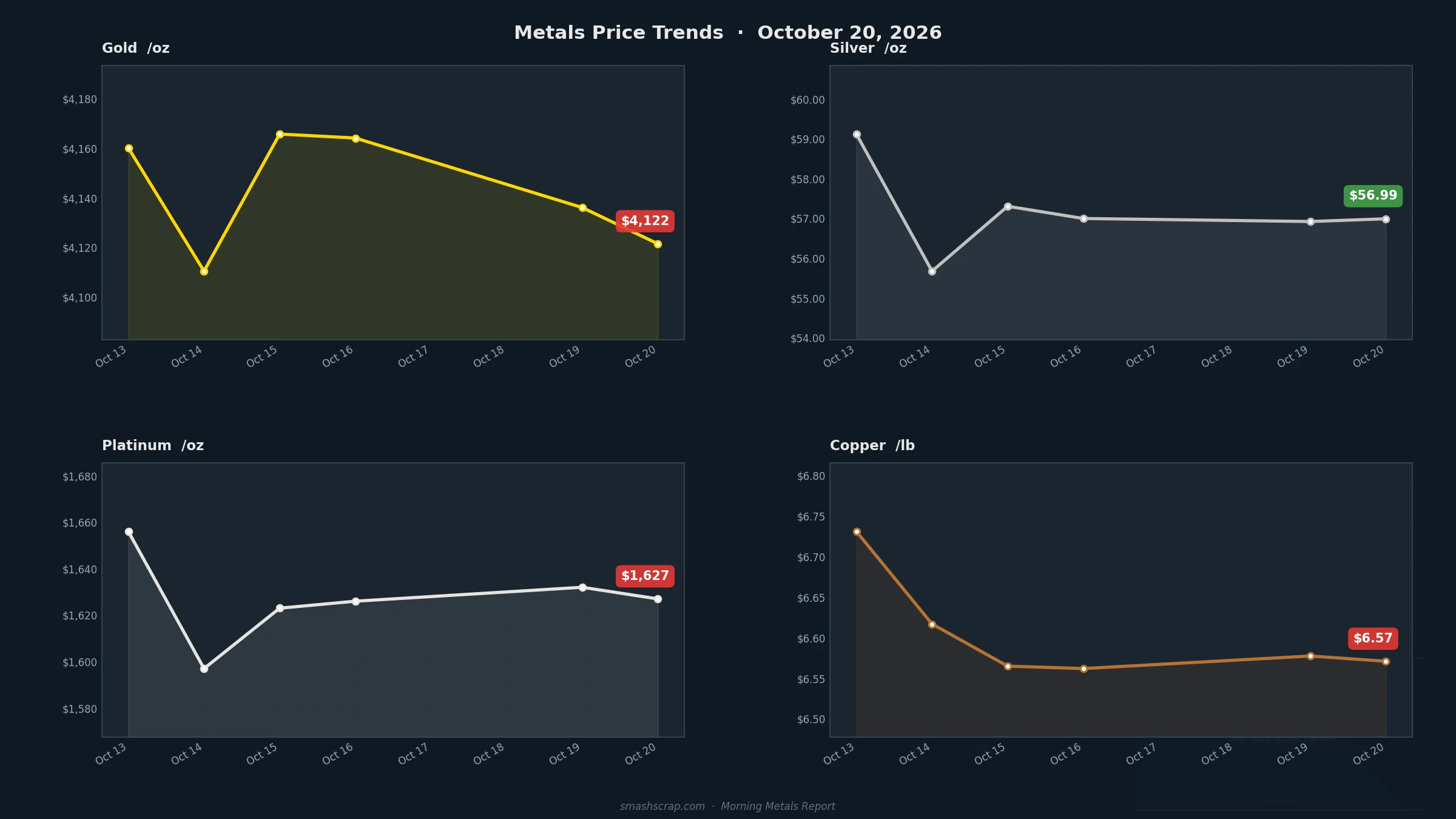
- Platinum spot is moving — sitting around $1,642/oz as of late July 2026. If you're holding cats or electronic scrap with PGM content, that short-term uptick matters for your reserve thinking.
- Asian ferrous import demand is softer — South Korea's H1 2026 ferrous scrap imports dropped 16.5% year-on-year. Weaker export demand can moderate price ceilings on prime and obsolete grades, even in interior markets like Minnesota. Know this before you set expectations.
Checking scrap metal auction prices today before listing isn't just smart — it's how you set a rational reserve and avoid pulling a load prematurely or holding it too long. More buyers means better price discovery, but only if you're listing at the right moment with the right documentation.
---Step 5: List on a Platform That Brings Vetted Buyers to You
You've sorted, weighed, documented, and photographed. Now you need buyers — not one buyer, but multiple buyers competing for the same load. That's where explore the SMASH scrap metal marketplace to see how the auction format works for industrial sellers.
SMASH connects yards and processors with vetted industrial scrap metal buyers across North America. No subscription fees. No guessing. The inventory tool keeps your listings organized. Auto-invoicing handles the paperwork after the hammer drops. And because buyers are vetted before they bid, you're not dealing with tire-kickers or no-shows at the dock.
For St. Paul yards processing mixed loads of ferrous, non-ferrous, or specialty scrap — including catalytic converters, auto cores, or industrial non-ferrous — the auction format removes the single-buyer problem entirely. One listing, multiple bids, full transparency on where the market actually sits for your specific material on that specific day.
There are no guarantees that every load sells or that prices will always move in your direction. But competition between buyers is how price discovery works in every functional market. The old way of calling one contact and hoping they're in a good mood that day isn't a pricing strategy — it's a guess.
---Frequently Asked Questions
Q: What types of industrial scrap metal buyers use platforms like SMASH?
SMASH connects sellers with vetted processors, brokers, mills, and specialty buyers across North America. Buyers on the platform are pre-qualified, which means serious bidders only — not casual inquiries. Industrial grades including ferrous, non-ferrous, cores, and catalytic converters all attract different buyer segments depending on the material and volume.
Q: How do I know what grade my scrap qualifies as before listing it?
Grade classification depends on alloy, gauge, cleanliness, and contamination level. For ferrous, the Institute of Scrap Recycling Industries (ISRI) specification sheets are the industry standard reference. For non-ferrous, copper grades like bare bright, #1, and #2 are defined by insulation, coating, and alloy content. When in doubt, document what you have accurately and let buyers assess — hiding contamination or over-grading material damages your reputation and invites disputes at pickup.
Q: Is there a minimum load size to list on SMASH?
Contact SMASH directly at jeff@smashscrap.com to discuss your specific load volume and material type. Load minimums and logistics vary by grade and buyer interest — your best move is a direct conversation rather than guessing.
Q: How do scrap metal auction prices today affect what I should list and when?
Current market prices should inform both your decision to list and any reserve price you set. Ferrous scrap prices track mill buying activity, export demand, and steel production schedules. Non-ferrous prices follow commodity spot markets. In mid-2026, firm mill demand and rising finished steel prices support a reasonably constructive outlook for ferrous grades in the upper Midwest, but conditions shift. Check current data before every listing decision — never assume yesterday's price holds today.
Q: I'm a St. Paul-area recycler — does SMASH serve my region?
Yes. SMASH serves yards and buyers across North America, including Minnesota and the broader upper Midwest. The platform is not region-locked — your load competes for bids from buyers across the continent, which is precisely the point. More geographic reach means more buyer competition for your material.
---List your scrap on SMASH today — register for free at smashscrap.com. If you're ready to sell or buy, email jeff@smashscrap.com directly and skip the line.
Follow SMASH on LinkedIn for ongoing scrap market insights, industry news, and updates from the platform — useful for any recycler who wants to stay ahead of where prices and demand are heading.
Disclaimer: Scrap metal prices fluctuate based on commodity markets, regional demand, and load-specific factors. All pricing references in this article reflect general market context as of July 2026 and should not be taken as current buying prices. Check live market data and contact buyers directly for current rates.
Note: For scrap car pickup services in Canada, get free scrap car pickup across Canada through our partner network.