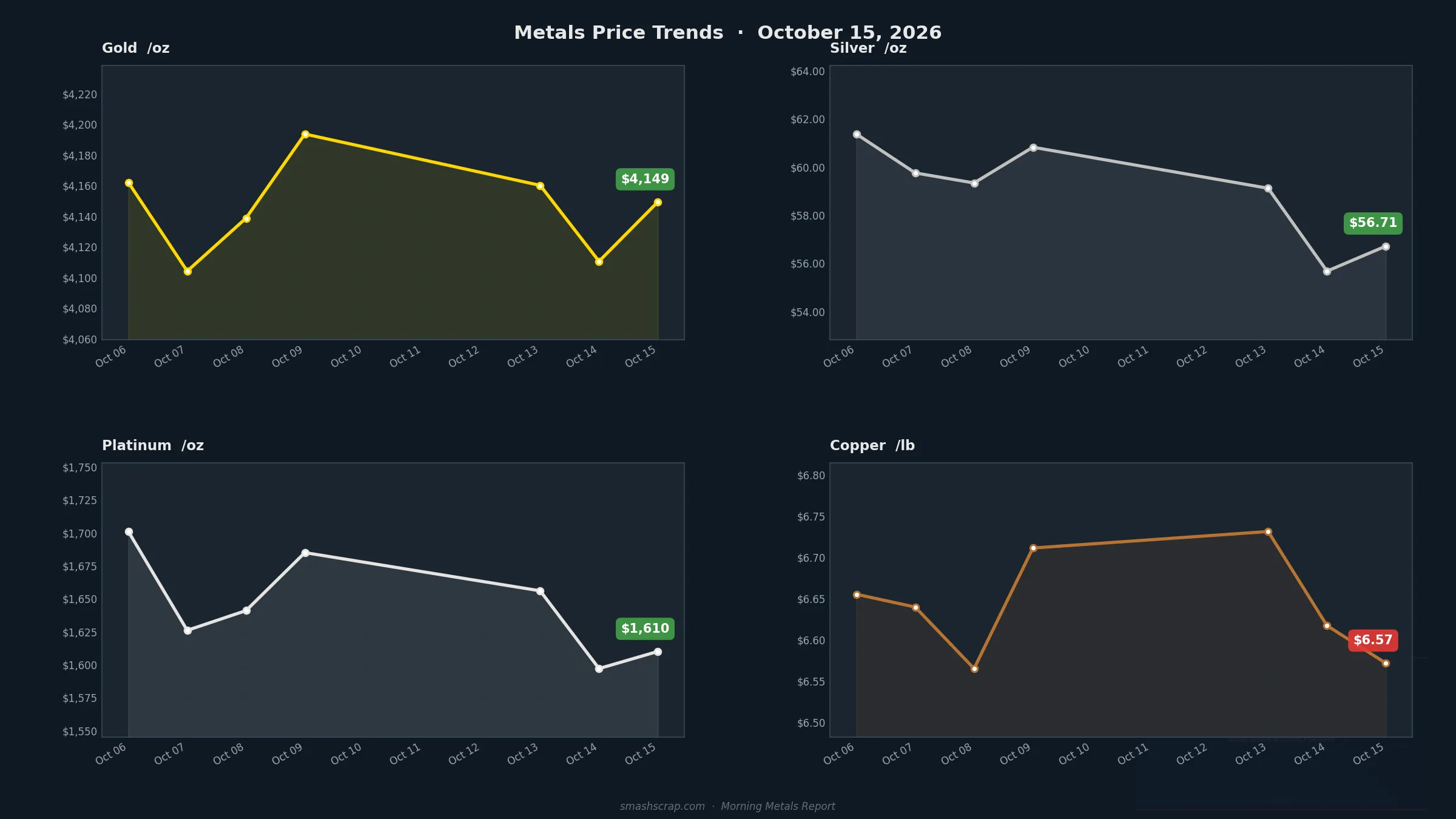
Industry Volatility: Madison Scrap Metal Trends
Weekly Scrap Metal Market Recap — Week Ending May 31, 2026
Two scrapyard fires in a single week. A London Metal Exchange platform outage that froze benchmark pricing for nearly three hours. Copper threatening record territory again. If this week felt volatile for scrap metal industry professionals, that's because it was. Here's what moved markets, what made headlines, and what recyclers and sellers need to watch heading into June.
Whether you're a dealer in Madison sorting nonferrous loads, a Wisconsin industrial recycler managing steel contracts, or a national buyer tracking commodity swings, this recap cuts through the noise. Let's get into it.
1. Two Scrapyard Fires Reignite Safety and Regulatory Pressure on the Industry
The week's most disruptive operational news came from New Jersey, where a massive fire tore through a scrap metal recycling plant in South Jersey, triggering air quality warnings across the surrounding area. Within days, a separate two-alarm fire hit a Camden scrapyard — prompting county officials to call for a full shutdown of that facility. Two fires, one week, one state. That's not coincidence. That's a pattern regulators notice.
For scrap yard operators, these incidents carry real downstream consequences beyond the immediate fire damage. Air quality warnings draw environmental agency attention. Shutdown demands, even when temporary, ripple through local supply chains and delay material flows to downstream processors. Buyers dependent on consistent volume from regional yards should factor operational risk into their sourcing strategies — especially heading into summer, when fire risk at outdoor material storage sites historically increases.
- Camden facility: County officials actively pursuing operational suspension following two-alarm fire on May 29.
- South Jersey recycling plant: Air quality warnings issued to surrounding communities; facility status under review.
- Regulatory risk takeaway: Facilities with unresolved safety violations face accelerating scrutiny in 2026 as state environmental agencies increase inspection frequency post-incident.
For sellers and buyers active in the Mid-Atlantic corridor, it's worth monitoring whether these closures create short-term regional supply tightening. Disrupted volume at one yard often pressures pricing at the next. Read the latest scrap industry news on SMASH for ongoing coverage as these situations develop.
2. Copper Near Record Highs as Geopolitical Risk and Structural Demand Converge
Copper was the headline commodity story this week, and not for the first time in 2026. Prices climbed approximately 9% since the onset of the Iran conflict, pushing back toward the record territory seen earlier this year when futures briefly surpassed $13,000 per tonne on international benchmarks. That's a number that matters to every recycler handling insulated wire, motors, plumbing scrap, or any form of red metal.
Three forces are driving this rally simultaneously, and none of them are going away quickly. First, geopolitical supply disruption — the Iran conflict is creating real anxiety around Middle Eastern copper trade flows and energy-intensive smelting operations. Second, structural demand from AI infrastructure buildout and electrification continues to absorb available refined supply faster than new mine output can compensate. Third, a weakening U.S. dollar has made dollar-denominated metals more attractive to international buyers, adding a currency-driven bid underneath spot prices.
- Copper scrap implication: Strong spot prices mean scrap copper is commanding premium pricing at yards right now. Sellers sitting on insulated wire, bare bright, or #1 and #2 copper should be actively pricing loads this week.
- Buyers' note: Expect continued bid competition for copper-heavy lots on SMASH Scrap — North America's B2B scrap metal auction platform as downstream demand remains elevated.
- Watch: Any ceasefire development or diplomatic resolution in the Iran conflict could introduce rapid downside volatility. Price accordingly.
Also worth noting: Edinburgh researchers this week licensed new technology for extracting gold and copper from electronic waste. While commercial-scale impact is still years out, this signals continued investment in urban mining as a supply source — relevant context for e-scrap and circuit board dealers monitoring the long-term competitive landscape.
3. LME Outage and Aluminum Tariff Pressure: Steel Scrap Market Analysis This Week
The London Metal Exchange made news for the wrong reasons this week. A technical failure in LME Select — the exchange's primary electronic matching engine — caused a nearly three-hour trading halt, freezing benchmark price updates for key metal contracts. Trading eventually resumed on a secondary engine at 1730 GMT, but the disruption exposed real fragility in the infrastructure that global scrap pricing ultimately references. When the LME can't set a benchmark, everyone downstream — from shredders to brokers to export traders — is flying partially blind.
On aluminum specifically, markets faced dual pressure. Trump's fresh 50% tariff on aluminum derivatives added uncertainty to domestic fabrication economics, even as slower Chinese output and improving EU demand provided fundamental support. MCX aluminum was down roughly 0.74% on the week in the latest tracked session. For U.S. recyclers, tariff-driven volatility in aluminum is now a recurring management challenge — not an exception.
For those tracking the steel scrap market analysis specifically, Brazil's renewal of steel import quotas this week is the most directly relevant policy development. Brazil's quota system limits cheaper foreign steel from flooding its domestic market — a policy move that, when replicated or echoed globally, can redirect international scrap flows and affect U.S. export pricing for obsolete grades. Wisconsin and Midwest industrial scrap generators who sell into export channels should track this.
- LME outage: Nearly 3-hour disruption to electronic benchmark pricing — a reminder that manual price verification remains essential during system events.
- Aluminum: Mixed signals — tariff pressure pulling prices down, supply tightening and Middle East disruption (QatarEnergy halting metal output) providing support.
- Brazil steel quota renewal: Reduces import competition domestically in Brazil; watch for downstream effects on international scrap export demand.
- Zinc: LME inventories near 120,000 tonnes versus 300,000 tonnes in April 2021 — a long-term bullish signal even amid short-term profit-taking pullbacks.
Sellers managing mixed nonferrous loads in Madison and across Wisconsin should pay close attention to how aluminum pricing evolves over the next two to three weeks as tariff impacts fully transmit into domestic dealer bids. Platforms that aggregate competitive buyer offers — like explore the SMASH scrap metal marketplace — become especially valuable during pricing uncertainty, because they let you see where the market actually clears rather than guessing from a single yard quote.
4. Precious Metals and Emerging Tech: What Scrap Dealers Should Know
Gold held firm this week after a late-week recovery, with Wall Street sentiment turning notably bullish heading into a critical labor market week. Jobs data and manufacturing prints due in early June will likely set the directional tone for precious metals in the near term. For catalytic converter dealers and precious metal scrap handlers, gold's macro narrative matters because platinum group metal (PGM) pricing often moves in sympathy with broader precious metal sentiment.
ScrapMonster's weekly precious metal scrap report covering May 22–28 showed continued price movement across gold, silver, platinum, and palladium grades — a reminder that the spread between spot and scrap recovery pricing is worth auditing regularly, especially for high-volume catalytic converter sellers. If you're not benchmarking your converter payouts against current PGM spot, you may be leaving real money on the table.
The Edinburgh e-waste extraction story deserves a second mention here. University researchers licensing technology to pull gold and copper from electronic waste at higher recovery rates is a signal that the sell scrap metal online ecosystem is evolving. E-scrap — computers, circuit boards, server racks — is moving from a niche category to a strategically important feedstock. Industrial sellers and IT asset recyclers in Wisconsin who haven't evaluated their e-scrap strategy recently should do so. The recovery economics are improving.
Fastmarkets also launched a new tungsten spot price assessment this week — covering unwrought metal bars at 99.8% minimum purity, CIF to main ports in the U.S., Europe, and Japan. Tungsten is a defense and hard-metal manufacturing critical mineral, and formal price transparency in this market is a meaningful development for any recycler handling tool steel, carbide, or specialty alloy scrap. Visit getmyscrapcar.com if you also have end-of-life vehicles in your material stream.
What to Watch the Week of June 1–7, 2026
Heading into the first full week of June, here are the four storylines with the most direct impact on B2B scrap metal operations in the U.S. and specifically the Midwest:
- U.S. jobs data and manufacturing PMI (early June): These prints will directly influence Federal Reserve rate expectations, the U.S. dollar, and by extension, commodity pricing across ferrous and nonferrous metals. A softer jobs report could support metal prices; a hot number could trigger a correction.
- New Jersey regulatory response: Watch for state environmental agency action following both scrapyard fires. Enforcement actions or additional shutdowns could tighten regional material supply through the Mid-Atlantic.
- LME system stability: After this week's outage, watch for LME communications about infrastructure upgrades or contingency protocols. Another major outage would erode confidence in exchange-based benchmark pricing.
- Aluminum tariff transmission: The 50% tariff on aluminum derivatives will begin showing up more concretely in domestic sheet and billet pricing next week. Scrap aluminum dealers should watch how this affects buy prices at yards and secondary smelters.
For Wisconsin recyclers and industrial sellers in the Madison area, June typically marks the start of high-volume demolition and construction activity — which historically drives increases in mixed metal and structural steel scrap generation. If you've been holding material, the next few weeks may represent a window worth monitoring closely.
Disclaimer: All price references in this recap reflect general market commentary and directional trends. Scrap metal prices fluctuate daily based on commodity markets, local supply and demand, and material grade. Always check current rates directly with buyers or through the B2B scrap metal Wisconsin and national listings on SMASH before making pricing or selling decisions.
Frequently Asked Questions
Q: How do scrap metal industry trends in 2026 affect what I get paid at my local yard?
Spot prices on the LME and COMEX set the ceiling for what downstream buyers will pay, but local yard pricing also reflects regional supply, transportation costs, and processing margins. When copper or aluminum moves significantly on global markets — as both did this week — expect bid prices at U.S. scrap yards to follow within one to five business days. Using a B2B scrap metal marketplace like SMASH helps you see competitive offers across multiple buyers rather than relying on a single local quote.
Q: Is it a good time to sell scrap metal online in Madison, Wisconsin right now?
With copper near multi-year highs and precious metal sentiment leaning bullish, nonferrous sellers in Madison are operating in a favorable pricing environment as of late May 2026. Ferrous markets are more mixed, influenced by tariff dynamics and export demand shifts. If you're holding nonferrous material, listing through an online auction platform can help you maximize price discovery in this environment.
Q: How does the LME outage this week affect U.S. scrap metal pricing?
The LME sets globally referenced benchmark prices for aluminum, copper, zinc, lead, and other base metals. When LME trading halts — even temporarily — it creates pricing uncertainty that ripples through scrap dealer bids, export contracts, and futures hedges. Most U.S. operations defaulted to previous-session reference prices during the outage, but it's a reminder to verify pricing sources during any system disruption event.
Q: What is driving copper scrap prices higher in 2026?
Three converging factors: geopolitical supply disruption from the Iran conflict, structural demand growth tied to AI infrastructure and electrification, and a weaker U.S. dollar boosting the appeal of dollar-denominated commodities. These are not short-term catalysts — most analysts expect elevated copper pricing to persist through the remainder of 2026 barring a significant demand shock or geopolitical resolution.
Q: How do I stay updated on weekly scrap metal industry trends as a Wisconsin recycler?
SMASH publishes weekly market recaps and industry news specifically for scrap sellers, buyers, and recyclers operating in the U.S. market. Bookmarking the SMASH blog and checking it each Sunday gives you a current, actionable summary before the trading week begins. Local trade associations in Wisconsin also publish regional pricing benchmarks that complement national commodity data.
Ready to put this week's market intelligence to work? List your scrap on SMASH today and connect with verified B2B buyers across North America. Register for free at smashscrap.com.
Follow SMASH on LinkedIn for daily scrap metal market insights, industry news, and platform updates — the best way to stay ahead of the market all week long.